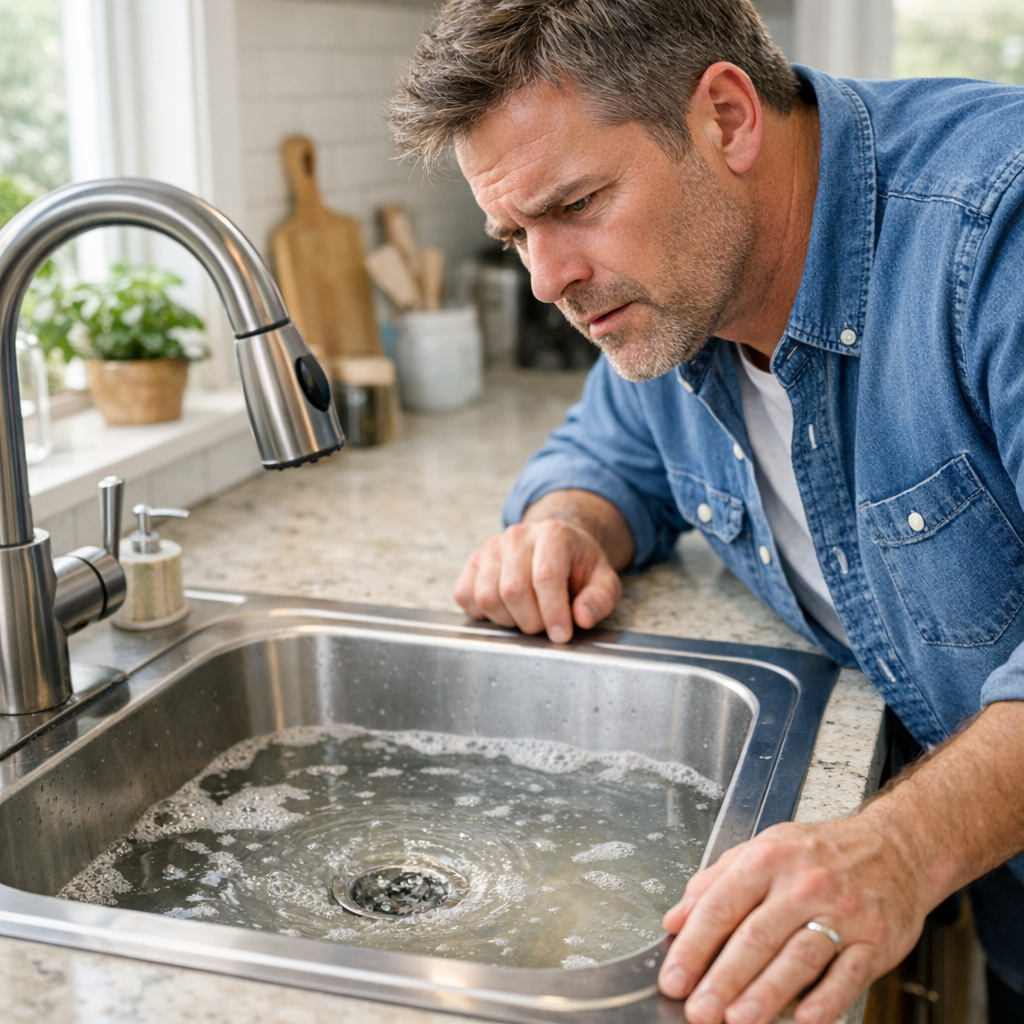
Warning Signs: When to Call for Residential Drain Cleaning
By Colossal Plumbing | Tulsa, OK
Every drain in your home will slow down eventually. It’s not a matter of if — it’s a matter of when. Hair, soap scum, grease, food particles, mineral deposits, and years of accumulated debris all take their toll on pipes that were engineered to last decades but were never designed to be completely maintenance-free.
The question most homeowners ask is: when does a slow drain cross the line from a minor annoyance into a problem that needs professional attention? The answer isn’t always obvious, and waiting too long to act often turns a straightforward drain cleaning into a much more expensive repair.
This guide covers the specific warning signs that tell you it’s time to stop hoping the problem resolves itself and time to call a licensed plumber.
Warning Sign #1: Multiple Slow Drains at the Same Time
A single slow drain — your bathroom sink, your shower, your kitchen — is typically a localized problem. Hair and soap buildup in the P-trap beneath a bathroom sink. Grease and food particles narrowing a kitchen drain line. These are common, easy to address, and usually isolated to one fixture.
Multiple slow drains occurring simultaneously throughout your home is a fundamentally different situation. When your kitchen sink, two bathrooms, and the laundry room are all draining sluggishly at the same time, the problem isn’t in any one of those fixtures — it’s deeper in your plumbing system, in the main drain line that connects all of them.
Main line blockages develop slowly and are often caused by one of three things: years of grease and debris accumulation that has narrowed the pipe to the point of restricted flow, root intrusion from trees in your yard seeking moisture, or a partial collapse of the pipe itself due to age or ground movement. None of these resolve on their own, and none are something a plunger or a bottle of drain cleaner will address.
If drains throughout your home are slow at the same time, stop using store-bought treatments and call a plumber. The sooner a main line blockage is diagnosed and cleared, the lower the risk of a complete backup — which is significantly more disruptive and more expensive than a drain cleaning.
Warning Sign #2: Water Backing Up into Other Fixtures
This one is impossible to ignore: you run the kitchen sink and water bubbles up into the sink next to it, or into the floor drain nearby. You flush the toilet and water rises in the bathtub. You run the washing machine and the utility sink fills with water.
When using one fixture causes water to appear in another, it means the shared drain line is blocked to the point where water has nowhere to go — so it finds the path of least resistance, which is back up through the nearest available opening.
This is an urgent situation. Stop using water-dependent appliances and fixtures immediately. Every additional gallon of water you put into the system increases the pressure behind the blockage and raises the risk of sewage backing up into your living areas — at which point you’re dealing with a health hazard in addition to a plumbing problem.
Call a plumber right away. This is the kind of situation where same-day service matters, and Colossal Plumbing’s emergency line is staffed around the clock for exactly these moments.
Warning Sign #3: Gurgling or Bubbling Sounds
Healthy drain pipes are quiet. When you hear gurgling, bubbling, or a hollow sucking sound from your drains — particularly when another fixture nearby is running — your drain system is telling you something.
These sounds are created when air is being displaced by water trying to move through a partial blockage. As water pushes past a narrowed section of pipe, it traps and releases air pockets, creating the characteristic gurgling sound. You might notice it when you drain the bathtub and hear gurgling from the toilet, or when you run the dishwasher and hear bubbling from the kitchen sink.
Gurgling from a single fixture can indicate a localized clog or a dry P-trap. Gurgling that seems to travel — that you can hear from multiple fixtures or that changes depending on which fixture is being used — points to a problem deeper in the system, often in the drain venting network.
Drain vent pipes run from your drain system up through the roof, allowing air into the system so water flows freely. When these vents are blocked — by debris, nesting animals, or ice in winter — negative pressure develops in the drain lines, causing the sucking and gurgling sounds you hear at fixtures. Left unaddressed, venting problems cause slow drains throughout the house and can allow sewer gases to enter your living space.
Warning Sign #4: Persistent or Recurring Clogs
A clog that you’ve cleared once — either yourself or with professional help — and never returns is typically a one-time event. A clog that keeps coming back in the same drain every few weeks or months is telling you that something about that drain is fundamentally different from what it was when it worked properly.
Recurring clogs can indicate:
Partial blockage that was never fully cleared. Store-bought drain cleaners and even some drain snakes clear enough of a blockage to restore flow without actually removing the obstruction. Within weeks, the remaining buildup accumulates more debris and the clog returns. Professional hydro-jetting — which blasts the entire interior circumference of the pipe with high-pressure water — clears the line completely rather than just poking a hole through the blockage.
Root intrusion. Tree roots that have entered your drain line through a crack or joint don’t stop growing once they’re inside the pipe. A drain snake can clear the roots that are currently blocking flow, but unless the root intrusion is addressed — either through root-killing treatment, mechanical cutting, or pipe repair — the roots grow back and the drain slows again.
Pipe damage or misalignment. A pipe section that has cracked, shifted, or partially collapsed creates a natural catch point where debris accumulates and clogs form repeatedly. No amount of drain cleaning will prevent recurring clogs in a damaged section of pipe — the underlying damage needs to be repaired.
If you find yourself dealing with the same slow drain or clog repeatedly, a camera inspection is the right next step. Seeing inside the pipe reveals exactly what’s causing the problem, so the solution addresses the actual cause rather than the symptom.
Warning Sign #5: Sewage Odors Coming from Your Drains
Your home’s drain system is a closed system designed to carry wastewater and sewer gases away from your living space through sealed pipes and properly maintained vent stacks. When you smell sewage inside your home — particularly from drain openings — that system has been compromised somewhere.
The most benign cause is a dry P-trap. The curved pipe section beneath every drain in your home holds a small amount of water that acts as a seal against sewer gas. Fixtures that aren’t used frequently — a guest bathroom sink, a basement floor drain — can dry out over time, allowing gas to pass through freely. Run the water for 30 seconds to refill the trap and the smell should resolve within an hour.
If sewage odors persist after checking and refilling your P-traps, the cause is more serious. Possibilities include:
- A cracked or broken drain pipe inside your wall or beneath your flooring, allowing gas to escape into the building
- A failed or improperly seated wax ring beneath a toilet, allowing gas to escape around the toilet base
- A blocked or damaged roof vent preventing proper ventilation of the drain system
- Significant buildup inside the drain lines themselves — years of accumulated grease, soap, and organic material can produce odors even without a complete blockage
Sewage gas isn’t just unpleasant — it contains hydrogen sulfide and methane, which are genuinely hazardous in enclosed spaces at high concentrations. Persistent sewage odors warrant professional investigation, not just an air freshener.
Warning Sign #6: Standing Water or Extremely Slow Drainage
Most drains have always had some lag between when you stop using water and when it clears — a sink takes a moment to drain, the shower floor holds water for a few seconds after you turn it off. But there’s a meaningful difference between normal drainage lag and the kind of slow drain that leaves standing water in your shower for five minutes or leaves your sink half-full while you brush your teeth.
When a drain has slowed to the point where water stands for more than a minute or two after use, the pipe is significantly blocked. At this stage, a complete clog is often not far behind. This is the point where acting quickly is significantly cheaper than waiting — a professional drain cleaning at this stage is straightforward, while waiting until the drain stops completely may reveal a more serious underlying cause.
Extremely slow drains at ground-floor fixtures — particularly floor drains in the basement or utility room — can also indicate that groundwater or backflow from the sewer system is entering the drain rather than exiting it. If you notice your floor drain filling rather than draining, treat it as an emergency and call a plumber immediately.
Warning Sign #7: Your Drains Have Never Been Professionally Cleaned
This one doesn’t announce itself the way the others do. There’s no gurgling, no odor, no standing water — just the quiet accumulation of years of use.
Most plumbers recommend having your main drain line professionally cleaned every 18 to 24 months as preventive maintenance — more frequently for households with heavy usage, older pipes, or known root intrusion issues. Kitchens drains in cooking-heavy households benefit from annual cleaning given how much grease and food residue moves through them over the course of a year.
If you’ve lived in your home for several years and can’t remember the last time your drains were professionally cleaned — or if you’ve never had it done — scheduling a cleaning before symptoms appear is almost always less expensive than waiting for a problem to develop. A camera inspection combined with a hydro-jet cleaning gives you a clear picture of your drain system’s condition and removes years of accumulated buildup in a single visit.
Think of it the same way you think about changing your car’s oil — you don’t wait for the engine to knock before you take care of it.
What Professional Drain Cleaning Actually Involves
Many homeowners assume professional drain cleaning is essentially what they’d do themselves with a store-bought snake, just done by someone with a license. It isn’t.
Drain snaking involves feeding a flexible cable through the drain until it reaches the blockage, then breaking through or pulling back the obstruction. It’s effective for soft clogs — hair, soap, food — but doesn’t clean the pipe walls or address buildup that hasn’t yet caused a complete blockage.
Hydro-jetting uses highly pressurized water — typically 3,000 to 4,000 PSI for residential work — delivered through a specialized nozzle that simultaneously blasts forward and backward through the pipe. It removes not just the blockage but the accumulated grease, mineral scale, and organic buildup coating the pipe walls, restoring the pipe to near-original interior diameter. The results last significantly longer than snaking alone.
Camera inspection uses a flexible waterproof camera fed through the drain line to provide a real-time view of the pipe’s interior — identifying the nature and location of any blockage, assessing the condition of the pipe walls, locating root intrusion, and revealing any damage or misalignment that might be contributing to drainage problems.
At Colossal Plumbing, we use camera inspection before recommending any drain repair to ensure we understand exactly what we’re dealing with — and we follow up hydro-jetting with a post-cleaning inspection to confirm the line is clear from end to end.
Why Store-Bought Drain Cleaners Aren’t the Answer
It’s tempting to reach for a bottle of liquid drain cleaner when a drain slows down. It’s inexpensive, it’s immediate, and it sometimes seems to work.
The reality is more complicated. Chemical drain cleaners use caustic chemicals — typically sodium hydroxide or sulfuric acid — that generate heat to dissolve organic blockages. They work on soft clogs in accessible parts of the drain, and they can provide temporary relief. But they don’t clean pipe walls, they don’t address root intrusion or pipe damage, and they don’t reach deep blockages in the main line.
More concerning is their effect on your pipes. The heat generated by chemical reactions can soften or warp PVC pipes, accelerate corrosion in older metal pipes, and degrade the rubber seals and gaskets in your drain fittings over time. Regular use of chemical drain cleaners can cause long-term damage to the very pipes they’re supposed to be helping.
For a slow drain that’s mildly inconvenient, a drain cleaner may provide temporary relief. For anything more significant — persistent clogs, multiple slow drains, recurring problems, odors, or backups — professional drain cleaning addresses the actual problem rather than masking it.
Serving Tulsa Homeowners with Professional Drain Cleaning
Colossal Plumbing provides residential drain cleaning services throughout the Tulsa metro, including Broken Arrow, Owasso, Bixby, Jenks, Sand Springs, Sapulpa, Claremore, Catoosa, Collinsville, Glenpool, Skiatook, Coweta, South Tulsa, Sperry, and Verdigris.
Whether you’re dealing with an urgent backup, a persistent slow drain, or you simply can’t remember the last time your drain lines were serviced, we’re ready to help.
Call (918) 553-0138 — available 24/7 for drain emergencies, and Monday through Saturday for scheduled service. We’ll get your drains flowing freely and give you a clear picture of your drain system’s condition while we’re at it.
Colossal Plumbing — Licensed, bonded, and insured for residential and commercial plumbing throughout Oklahoma. Serving the Tulsa metro since 2001.
