How to Choose the Right Water Heater Size for Your Growing Family
By Colossal Plumbing | Tulsa, OK
When you bought your home, the water heater was probably already there — a detail you didn’t think much about. But families grow. Kids get older. Teenagers take longer showers. You add a bathroom. A parent moves in. And suddenly the 40-gallon tank that worked just fine four years ago is the source of a daily argument about who runs out of hot water first.
Choosing the right water heater size isn’t complicated, but it does require understanding a few key concepts — and being honest about where your household is headed, not just where it is today. This guide walks you through exactly what to consider so you can make a decision that serves your family for the next decade, not just the next year.
Why Sizing Matters More Than Most People Realize
An undersized water heater is an obvious problem — you run out of hot water. But an oversized water heater carries its own costs that are easy to overlook. A tank that’s too large for your household heats and reheats water that nobody ever uses, wasting energy continuously. In a home where hot water demand is modest, a 75-gallon tank isn’t generous — it’s wasteful.
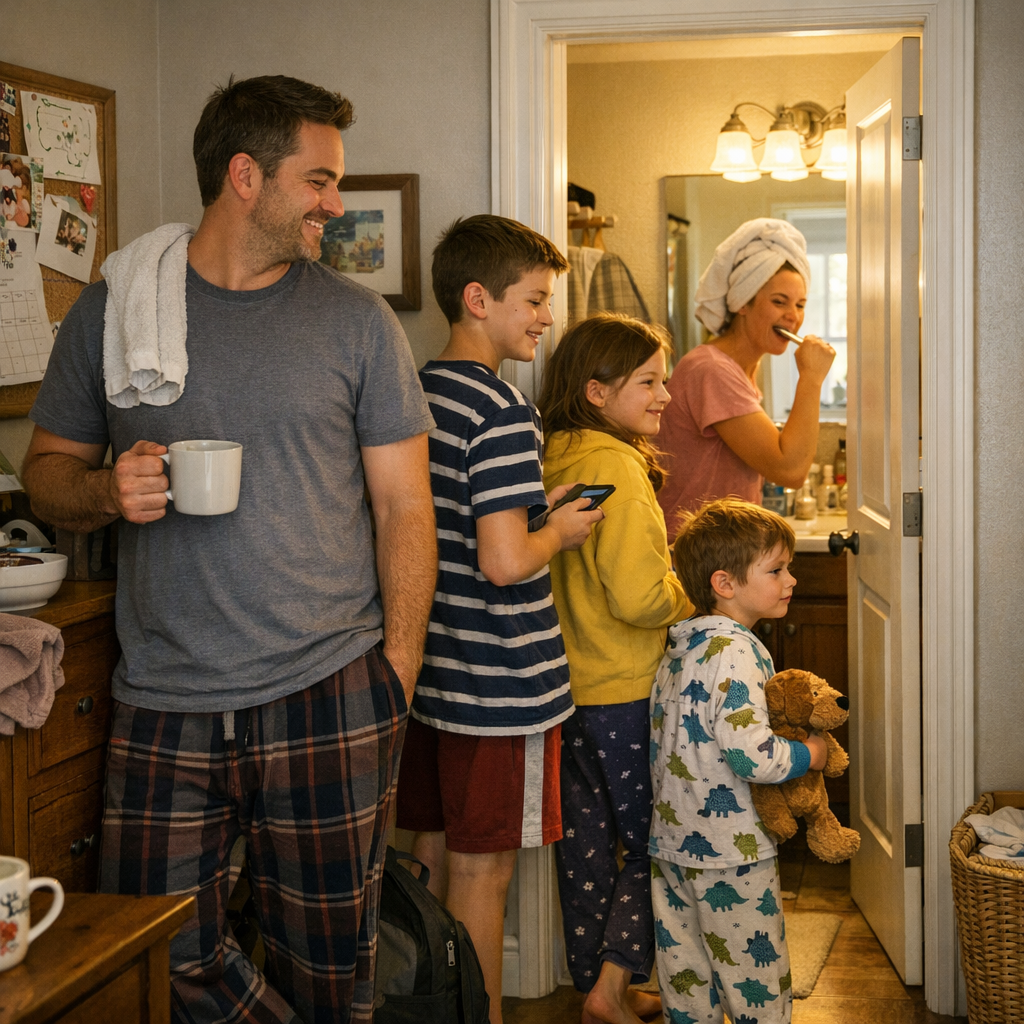
Getting the size right means matching the unit’s capacity to your household’s actual peak demand: the busiest period of the day when the most hot water is being used simultaneously. For most families, that’s the morning rush — showers, breakfast dishes, the washing machine, and anything else that happens before everyone leaves for school or work.
Understanding the Two Ways Tank Size Is Measured
When shopping for a tank water heater, you’ll encounter two measurements that both matter:
Tank capacity is the total number of gallons the unit holds — the number you see prominently on the label. A 50-gallon tank holds 50 gallons of heated water.
First Hour Rating (FHR) is the more important number for sizing purposes. It measures how many gallons of hot water the unit can supply in the first hour of use, starting with a full tank. FHR accounts for both the stored water and the water that heats up as the tank refills during that hour. Two 50-gallon tanks from different manufacturers can have meaningfully different FHR ratings depending on the power of their heating elements and burners.
When sizing a tank water heater, match your household’s peak hour demand to the FHR — not just the tank capacity. The FHR is printed on the EnergyGuide label that comes with every new unit, and it’s the number your plumber will use when recommending a size.
The General Sizing Guidelines
These guidelines give you a starting point. Your actual needs may vary based on your household’s habits, the number of bathrooms, and whether you have high-demand appliances like a large soaking tub or a high-flow shower system.
| Household Size | Recommended Tank Capacity | Minimum FHR |
|---|---|---|
| 1–2 people | 30–40 gallons | 40–50 gallons/hour |
| 3–4 people | 40–50 gallons | 50–60 gallons/hour |
| 5–6 people | 50–75 gallons | 60–80 gallons/hour |
| 7+ people | 75–80 gallons or dual units | 80+ gallons/hour |
These are guidelines, not guarantees. A family of four where two teenagers each spend 20 minutes in the shower every morning has different needs than a family of four where everyone showers quickly and the kids are still young. Your actual peak hour demand is the number that matters — and it’s worth taking a few minutes to estimate it honestly.
How to Estimate Your Peak Hour Demand
To calculate your household’s peak hour demand, identify the busiest hour of your typical day and estimate the hot water usage during that window. Use these standard estimates for common fixtures and appliances:
| Activity | Estimated Hot Water Use |
|---|---|
| Shower (8 minutes) | 10–12 gallons |
| Bath (full tub) | 20–30 gallons |
| Shaving (tap running) | 1–2 gallons |
| Hand washing (per use) | 1–2 gallons |
| Dishwasher cycle | 6–10 gallons |
| Washing machine (warm/hot) | 7–14 gallons |
| Kitchen sink (per minute) | 1–2 gallons |
Add up the estimated usage for everything that might happen simultaneously — or in close succession — during your peak hour. That total is your peak hour demand. Compare it to the FHR of the unit you’re considering. If the FHR is equal to or higher than your peak demand, the unit is appropriately sized.
A practical example: A family of five with three school-age kids has a typical morning that includes four showers, the dishwasher running, and one load of laundry started before work. That adds up to roughly 55 to 65 gallons in the first hour. A 50-gallon tank with a 60-gallon FHR would just barely keep up — a 75-gallon unit with a 70-gallon FHR gives them comfortable headroom.
Planning for Growth: Don’t Size for Today
This is the mistake that sends homeowners back to their plumber within a few years. You have two kids today, but they’ll be teenagers in five years. You’re planning to finish the basement bathroom next year. Your in-laws are talking about moving closer.
When you’re replacing a water heater, size it for where your household is headed over the next five to eight years, not just where it is today. Moving up one size — from a 50-gallon to a 65-gallon unit, for example — typically adds only a modest amount to the upfront cost but can make a significant difference in daily comfort as your family grows.
Talk to your plumber about your household’s trajectory. A good plumber will ask questions about your plans before making a recommendation, not just plug numbers into a formula.
When a Tank Water Heater Isn’t the Right Answer for a Growing Family
As households get larger and hot water demand increases, there’s a point where a single tank water heater — regardless of size — becomes an increasingly inefficient solution. At that point, it’s worth considering alternatives.
Tankless Water Heaters
For growing families where the core problem is running out of hot water rather than having enough capacity for peak hour simultaneous use, a tankless system eliminates the problem entirely. A properly sized tankless unit can supply hot water to multiple fixtures simultaneously without limit — you simply cannot run out because there’s no finite reservoir to deplete.
The tradeoff is flow rate rather than capacity. A tankless unit has a maximum gallons-per-minute output — if demand exceeds that rate, water temperature drops. Sizing a tankless unit for a large or growing family means selecting a unit with a high enough flow rate to handle your realistic peak simultaneous demand. For larger households, this sometimes means installing two tankless units in parallel — an investment, but one that delivers effectively unlimited hot water for any size household.
Two Water Heaters
For very large households or homes with high hot water demand spread across multiple distant bathrooms, two standard tank units — installed in series or parallel — can be more cost-effective than a single large unit or a premium tankless system. This approach also provides redundancy: if one unit fails, the other continues to supply hot water while repairs are arranged.
Point-of-Use Water Heaters
For households where the challenge isn’t total capacity but long wait times at distant fixtures — a bathroom at the opposite end of the house from the water heater, or a basement sink that never seems to get truly hot — a small point-of-use electric water heater installed directly at that fixture delivers instant hot water without waiting for the main system to deliver it through a long run of pipe.
Gas vs. Electric: Does It Affect Sizing?
For tank water heaters, fuel type affects how quickly the unit recovers after a period of heavy use — and this matters when sizing for a growing family.
Gas water heaters recover faster than electric units of the same tank capacity. A 50-gallon gas unit with a high recovery rate can effectively deliver more usable hot water per hour than a 50-gallon electric unit, because it reheats the incoming cold water more quickly as the tank depletes.
Electric water heaters have slower recovery rates in general, which means a growing family switching from gas to electric — or in a home without a gas connection — may need to size up one tier to achieve equivalent performance. A household that would be comfortable with a 50-gallon gas unit might need a 65-gallon electric unit to get the same real-world experience.
If your home has natural gas available, a gas water heater is almost always the better choice for a family with growing hot water demand — both for recovery rate and for operating cost.
Signs Your Current Water Heater Is Already Undersized
If you’re reading this because your family has already grown and your current water heater is struggling to keep up, these are the signs you’re likely already familiar with:
- Regular cold water at the end of the shower lineup
- Lukewarm water for the last person — the tank hasn’t run completely dry but it hasn’t fully recovered either
- Running the dishwasher or laundry noticeably affects shower temperature
- Morning routines require careful scheduling to avoid conflicts
- Your water heater’s recovery cycle runs almost continuously
Any of these experiences indicates your current unit is undersized for your household’s current demand — and the problem will only get worse as your family grows.
Getting the Sizing Right: Work With a Licensed Plumber
The guidelines in this article will get you to the right neighborhood, but the best water heater sizing for your specific home accounts for factors that require professional assessment — your home’s pipe layout and how far the water heater is from key fixtures, your incoming water temperature (which varies by season in Oklahoma), your water quality, and the specific FHR ratings of units that are currently available.
At Colossal Plumbing, we size every water heater installation based on your household’s actual usage patterns and your home’s specific infrastructure — not on a one-size-fits-all formula. We’ll ask the right questions, give you honest options across a range of price points, and install the unit that serves your family well for years to come.
We serve homeowners throughout the Tulsa metro, including Broken Arrow, Owasso, Bixby, Jenks, Sand Springs, Sapulpa, Claremore, Catoosa, Collinsville, Glenpool, Skiatook, Coweta, South Tulsa, and surrounding communities.
Call (918) 553-0138 to schedule a free water heater consultation — whether you’re replacing an aging unit, upgrading for a growing family, or simply want to know if your current system is doing its job.
Colossal Plumbing — Licensed, bonded, and insured for residential and commercial plumbing throughout Oklahoma. Serving the Tulsa metro since 2001.
