
If your water heater pilot light keeps going out, you are not dealing with a stubborn flame. You are dealing with a safety system doing its job — or failing at it. In most cases, a pilot that will not stay lit points to a dirty or weak thermocouple or thermopile, a clogged pilot orifice or pilot tube, a failing gas control valve, or a draft or venting problem that keeps blowing the flame out.
Relighting it over and over without fixing the cause will not hold. The pattern usually tells you a lot: when it goes out, whether it lights easily, and what the flame looks like all point toward the likely cause.
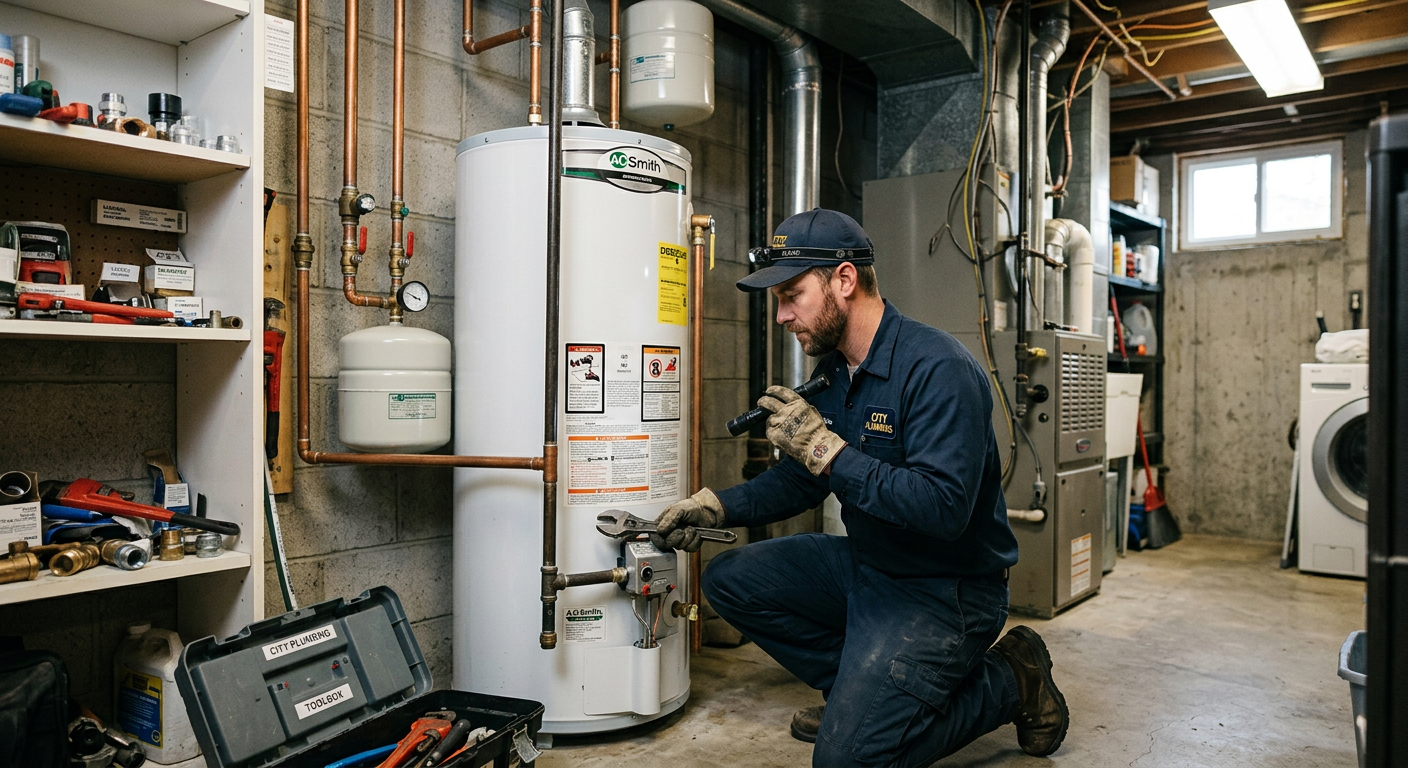
How Your Pilot Light and Thermocouple Work Together
A standing pilot is a small, steady gas flame that stays lit so it can light the main burner whenever the thermostat calls for heat. The thermocouple sits in that flame. When it gets hot, it generates a tiny electrical signal — measured in millivolts — that tells the gas control valve it is safe to keep gas flowing to the pilot.
If the flame goes out, the thermocouple cools, the signal drops, and the valve shuts off the gas. That is the safety system working as designed, to stop gas building up if the flame dies. Some larger heaters use a thermopile instead, which works the same way but produces a stronger signal.
7 Common Reasons the Pilot Light Keeps Going Out
Most pilot problems come down to one of these causes.
1. A worn or dirty thermocouple
This is the most common cause, and the most straightforward to test. Over time, the thermocouple tip can corrode, bend out of the flame, or build up soot and scale. A weak thermocouple may still light the pilot, but it cannot hold the valve open once you release the control knob. If the pilot goes out the moment you let go, the thermocouple is the first suspect.
2. A clogged pilot tube or orifice
The pilot orifice is a tiny opening, and it does not take much dust, rust, or debris to partly block it. A partly blocked pilot burns with a small, weak, yellowish flame instead of a strong blue one, and a weak flame may not heat the thermocouple enough. In Tulsa, dust is a real factor, especially for heaters in garages, where dust and lint collect around the base of the tank.
3. Downdrafts, poor venting, or a blocked flue
A water heater needs a clear path for exhaust gases to leave through the flue and out the roof. If the flue is blocked, disconnected, or poorly sized, exhaust can spill back down and snuff the pilot. Strong Oklahoma wind can also push air down the vent. If your pilot tends to go out when it is windy, draft and venting deserve a close look.
4. A failing gas control valve
The gas control valve reads the thermocouple signal and controls gas to the pilot and burner. If the valve itself is failing, it may shut off even when the thermocouple is sending a good signal. This is not a part to guess at: a plumber tests the thermocouple first, and only then tests or replaces the valve.
5. Low gas supply or demand from other appliances
If the gas supply to the house is interrupted, or pressure drops when another large gas appliance kicks on, the pilot can starve and go out. Check whether other gas appliances are working normally. If the furnace, stove, or dryer is also acting up, the problem may be with the gas supply itself, not the water heater.
6. Dust in the burner compartment and too little combustion air
A gas burner needs clean air to burn properly. In older Tulsa homes, water heaters often sit in a closet, a garage, or a tight utility nook, where dust builds up and air can be limited. A dusty burner compartment can starve the flame and leave soot on the thermocouple and pilot. Keep the area around the heater clear, but leave cleaning inside the burner compartment to a professional.
7. Age of the water heater
Pilot assemblies, thermocouples, and gas valves wear out. If your heater is near the end of its expected life, pilot trouble is often one of the first signs the whole unit is getting tired. Many pilot problems are still repairable, but age changes the math. If you are weighing repair against replacement, it helps to know how long a water heater lasts in Tulsa before you decide.
What You Can Safely Check Yourself
You do not need to take anything apart to gather useful clues. If the pilot is out and you have no hot water, our no-hot-water homeowner checklist is a good place to start. Then try these safe checks:
- Confirm the gas supply: check whether other gas appliances, such as the stove or furnace, are working normally.
- Look — without disassembly — for obvious dust or debris around the base of the heater, and make sure the area around it is clear.
- Look through the sight glass, if your heater has one. A healthy pilot flame is steady and blue, and it should wrap around the tip of the thermocouple. A tiny, yellow, or flickering flame is a clue.
- Note the timing. Does it go out in wind, or when the furnace runs? That pattern helps a plumber narrow down the cause.
- From outside, check that the vent and flue cap look intact, with no obvious damage. Do not climb on the roof.
Stop and Call for Help: Gas Safety Warnings
If you smell gas — a rotten-egg smell — do not relight the pilot, do not flip light switches, and do not use your phone inside the house. Leave the house right away and call your gas company or emergency services from outside. Do not go back in until you are told it is safe.
Never bypass the thermocouple, tape or hold the control knob down, or try to force the valve to stay open. Never take apart a gas line or the gas control valve yourself. If the pilot will not stay lit after one careful relight, stop and call a licensed plumber.
What a Professional Repair Typically Involves
A plumber starts by testing, not guessing: measuring the thermocouple’s millivolt output, cleaning or replacing the pilot assembly if the signal is weak, and checking gas pressure, draft, and venting. If the thermocouple tests fine but the valve still drops out, the gas control valve may need testing or replacement. See our Water Heater Services page.
What If Your Heater Has No Pilot Light at All?
Many newer tank and tankless heaters use electronic ignition instead of a standing pilot, lighting the burner only when hot water is needed. If yours has no pilot, the problem and fix are different. Our look at tankless water heaters in Tulsa explains the pros and cons.

Frequently Asked Questions
Is it safe to keep relighting the pilot?
One careful relight, following the instructions on the heater, is usually fine if there is no smell of gas. If it goes out again right away, stop and call a plumber.
Can a thermocouple be cleaned, or does it need to be replaced?
Light soot can sometimes be cleaned, and a plumber can test whether that restores a strong signal. More often, a worn or corroded thermocouple is replaced — but testing first matters, since a good thermocouple will not fix a failing valve or venting problem.
Why does the pilot go out when it is windy?
Wind can push air down the flue and blow out a weak pilot, especially if the vent cap is damaged or the flame is already weak. A strong, healthy pilot can usually ride out normal gusts.
Call Colossal Plumbing for Water Heater Help in Tulsa
If your pilot light keeps going out in Tulsa, Broken Arrow, Owasso, Bixby, Jenks, Sand Springs, Sapulpa, or Claremore, Colossal Plumbing can test the thermocouple, clean or replace the pilot assembly, and check your venting so the fix holds. Call (918) 553-0138 or visit our Get a Quote page to schedule a visit. We are open Monday through Saturday, 7 AM to 7 PM, with 24/7 emergency service.
