
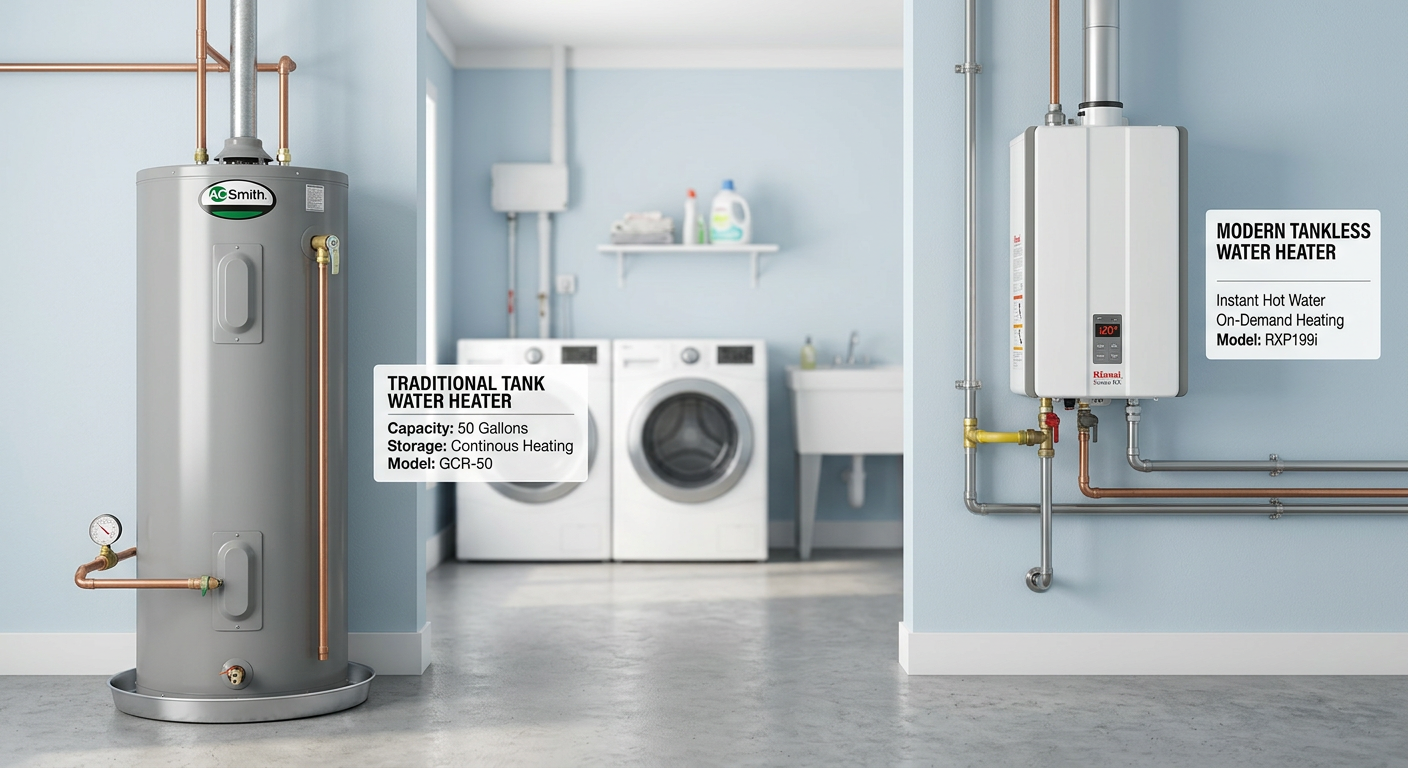
If you are wondering how long a water heater lasts, here is the straight answer first. A conventional tank water heater in a Tulsa home typically lasts about 10 to 15 years. A tankless water heater, kept up with regular descaling, can last around 20 years. Those are typical ranges, not promises — some units fail earlier, especially if they have been neglected, and a few well-maintained tanks keep going longer.
The more useful question is whether yours is showing signs it is near the end. A water heater rarely fails without warning — it usually gives weeks or months of clues: noises, rusty water, lukewarm showers, or a damp floor. Catching them early is the difference between a planned replacement and a cold shower, a flooded utility room, and an emergency call.
How to Find Out How Old Your Water Heater Is
Start with the rating label on the side of the tank. It carries the manufacturer, model, and serial number, and on many brands the serial number contains the month and year the unit was made. If you cannot decode the serial number, look for an installation sticker from the plumber who installed it, or check any paperwork left with the house when you bought it.
If there is no clear date, judge condition too: a clean, dry tank is very different from one with rust streaks and crusty buildup around the fittings.
What Shortens a Water Heater’s Life in Tulsa
Two local factors work against water heaters here.
First, water in the Tulsa area is generally hard, meaning it carries dissolved minerals. Inside a tank, those minerals settle as sediment, forcing the burner or elements to work harder, creating popping and rumbling, and speeding corrosion. In a tankless unit they build scale in the heat exchanger. A heater in hard water that is never flushed will usually not reach the top of its expected lifespan.
Second, how hard it works matters. A large household in Broken Arrow, Owasso, or Bixby running back-to-back showers, laundry, and a dishwasher wears a heater faster than a small household. Very high temperature settings and skipped maintenance shorten life too.
The Warning Signs Yours Is About to Fail
1. It Is Past the Typical Range and Acting Different
If your tank heater is 12 or older and anything else on this list sounds familiar, take it seriously. Age alone is not a reason to replace a working unit, but age plus symptoms is a strong signal to plan.
2. Rusty or Discolored Hot Water
If rusty water comes only from the hot taps, the inside of the tank may be corroding. Persistent rusty hot water from an older tank often means the lining and anode rod are spent and the steel itself is starting to go. Once a tank rusts from the inside, repair is rarely a lasting fix.
3. Popping, Rumbling, or Banging Noises
Those sounds are usually sediment. Water trapped under a layer of hardened sediment at the bottom of the tank boils and pops as the burner heats it. Flushing can help if the sediment is still loose. If the tank has rumbled for years, the extra heat and stress have usually already taken life off the unit.
4. Water Around the Base, or Moisture That Keeps Coming Back
A small drip from a fitting or relief valve may be repairable. But water seeping from the tank body, rust at the base, or a pan that is wet again a day after you dry it usually means the tank is leaking. A leaking tank cannot be patched — it needs replacement, sooner rather than after it lets go.
5. Lukewarm Water, or Hot Water That Runs Out Faster
If showers turn lukewarm or the tank empties much faster than it did, the heater is losing capacity. That can be a failing element, thermostat, dip tube, or heavy sediment. Some are repairs; on an old tank, they are often the first sign the whole unit is wearing out.
6. The Pilot Keeps Going Out, or the Unit Shuts Down
On gas models, a pilot that will not stay lit can be a thermocouple or gas control issue. On tankless models, repeated shutdowns or error codes can point to scale, venting, or ignition problems. These are diagnosis jobs, not guesswork.
What You Can Safely Check Yourself
You do not need tools for the most useful checks. Note the age. Look — without touching anything hot — for water, rust, or mineral crust around the base and fittings. Listen when it fires. Note whether the problem is hot water only, and whether it affects one fixture or the whole house.
You can also check the temperature setting. Around 120 degrees Fahrenheit is the setting most commonly recommended for balancing comfort, safety, and efficiency. If yours is set much higher, the unit is working harder than it needs to and scald risk goes up.
Stop there. Do not drain a tank, pull an anode rod, open a gas line, bypass a safety valve, or remove covers from electrical components unless you genuinely know that work. The temperature-and-pressure relief valve and the gas and electrical connections are safety systems, not homeowner experiments.
How to Make a Water Heater Last Longer
For a tank heater, flushing sediment from the tank about once a year is the single most useful habit, especially with Tulsa’s hard water. Having the anode rod — the sacrificial rod inside the tank that corrodes so the tank does not — checked every few years and replaced when it is spent can add real life to a tank. Colossal Plumbing lists anode rod replacement among its water heater services for exactly that reason.
For a tankless heater, plan on regular descaling to clear mineral buildup from the heat exchanger. In hard water, skipping that service is the most common reason a tankless unit underperforms or fails early. If you are weighing tank against tankless, our guide to tankless water heaters in Tulsa: the honest pros and cons walks through that choice in detail.

If you are not sure what your unit needs, start on our Water Heater Services page, which covers repair, traditional tank installation, tankless service, leaking heaters, and anode rod replacement.
Repair or Replace — How to Decide
A useful way to think about it: repair a younger unit with a specific, identified problem. Plan replacement when an older tank has a leaking or rusting tank body, needs a major repair, or has had several different problems in a short stretch. No repair makes an old tank young again.
Replacement usually involves shutting off water, gas or power, draining and removing the old unit, connecting the new heater, filling and testing it, checking venting and safety controls, and hauling the old unit away. A like-for-like swap is simplest; switching to tankless or upgrading gas, venting, or electrical service is more involved.
Frequently Asked Questions
Can a water heater last 20 years?
A tankless unit can, with regular descaling. A conventional tank lasting 20 years is the exception, especially in hard water. If yours is near that age, plan a replacement — do not wait for a leak.
Is a noisy water heater dangerous?
Popping and rumbling are usually a wear-and-efficiency problem, not an immediate danger, but do not ignore them. Leaking, a relief valve discharging repeatedly, a strong gas smell, or scorch marks means stop and call a professional right away.
Should I replace my water heater before it fails?
If it is past the typical lifespan and showing two or more warning signs, yes. A planned replacement lets you choose the right size and type instead of taking whatever is available on an emergency day.
Think Yours Is Getting Close?
If your water heater is old, noisy, rusty, leaking, or just not keeping up, contact Colossal Plumbing for an honest assessment. Call (918) 553-0138 or visit our contact / Get a Quote page on colossalplumbing.com. We serve Tulsa and the surrounding communities, including Broken Arrow, Owasso, Bixby, Jenks, Sand Springs, Sapulpa, and Claremore. We are open Monday through Saturday, 7 AM to 7 PM, with 24/7 emergency service — so if that old heater lets go at the worst moment, we are still a phone call away.
