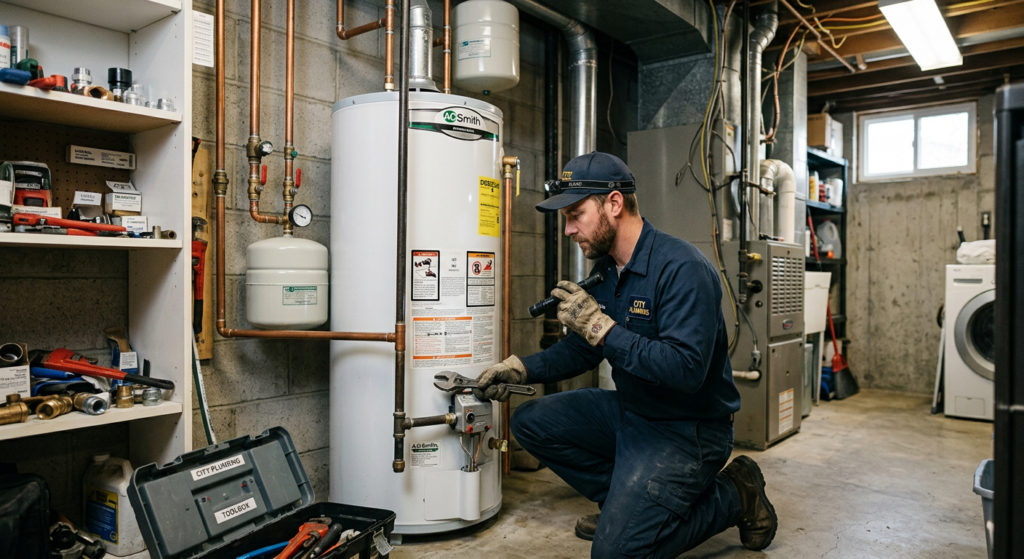
If your water heater is getting old, or you are remodeling in Tulsa, one question comes up fast: should I get a gas or electric water heater? The short answer is that the right choice usually follows what your home already has. If you have a gas line and venting in place, gas is often the straightforward choice. If your home is all-electric, electric is often the simpler fit.
Neither type is right for every home. Gas usually heats water faster and keeps up when several people shower back to back. Electric is usually simpler to install, quieter, and easier to place.
How a Gas Water Heater Works
A gas water heater burns natural gas in a burner under, or inside, the tank. The flame heats the water, and a thermostat shuts the burner off at the set temperature. When you use hot water, cold water flows in and the burner fires again. Because the burner puts out a lot of heat at once, a gas tank usually reheats faster than a comparable electric tank.
How an Electric Water Heater Works
An electric water heater has no flame and no vent. Two heating elements, one near the top and one near the bottom, heat the water directly. A thermostat controls each element, and the tank is well insulated to hold the heat. Electric models are quiet and produce no exhaust in the home. Their trade-off is recovery time: heating with elements usually takes longer.
Upfront Cost vs. Operating Cost
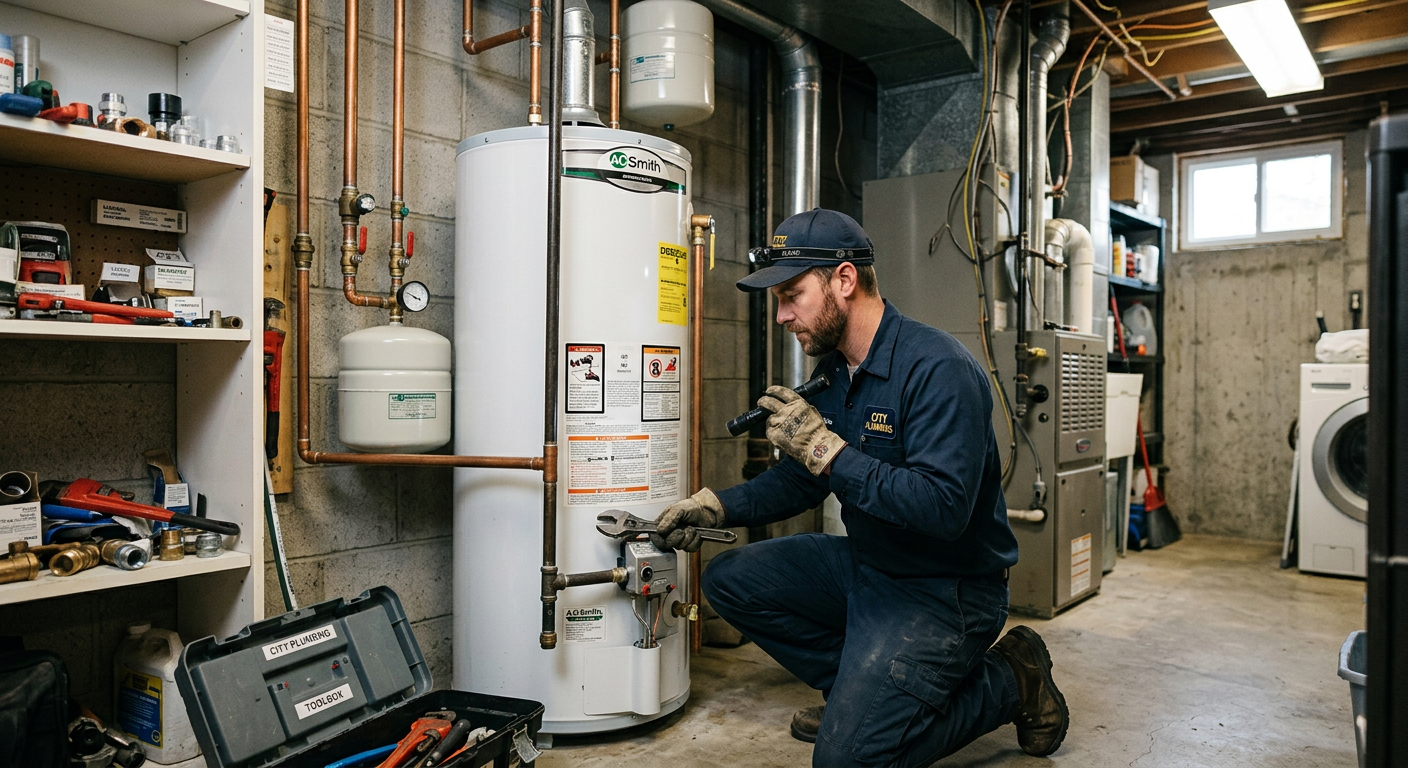
Upfront, the unit itself is only part of the bill. The full job includes installation, venting or electrical work, any gas line or panel work, and removing the old heater. A like-for-like swap — gas for gas, or electric for electric, in the same spot — is usually the least expensive replacement. Switching fuel types is where costs climb, because the home itself has to change.
Running costs depend on local gas and electricity prices, how efficient the model is, how much hot water you use, and how cold the incoming water is. In general, gas often costs less to run per unit of heat in many homes, while electric models can be very efficient because almost none of their heat is lost up a vent. Ask for a quote for the complete job, not just the unit.
Energy and Efficiency Considerations
Both types now come in more efficient models, including high-efficiency gas units and electric heat pump water heaters, which move heat rather than making it from scratch. Insulation, tank size, and setup matter as much as fuel. A right-sized heater, set to a safe temperature and kept clear of heavy sediment, will do better than an oversized or neglected one of either type.
Venting and Gas Line Requirements for Gas
Gas needs two things electric does not: a gas supply and a safe way to get exhaust out of the house. The gas line must be sized for the heater, and installed and tested properly. The vent must be the right material and size, with the right slope and clearances, and end outside. Older Tulsa homes sometimes have venting that suited the old heater but not a new model. A pro should check the line, the vent, and combustion air first.
Electrical Panel Requirements for Electric
Electric needs a dedicated circuit and enough capacity in your panel. A standard electric tank usually needs a 240-volt circuit and a breaker sized for the heater. If your panel is full, old, or close to its limit, you may need a panel upgrade or a subpanel before an electric heater can be installed safely. That work should be done by a licensed electrician or a plumber working with one.
Space and Installation Considerations
Tank water heaters take up floor space, usually in a garage, utility closet, or basement. Gas models also need clearance around the vent and burner, and room for combustion air. Electric models are more flexible because they need no vent, but they still need access for service, a drain nearby in case of a leak, and room to remove the unit later. Measure the space before you buy.
Lifespan and Maintenance Differences
With regular care, a tank water heater of either type can serve a household for many years, and gas and electric models are broadly in the same range. What shortens life most is not the fuel, but neglect. Sediment builds up, the anode rod wears out, and small leaks go unnoticed. Flushing the tank and checking the anode rod on a regular schedule help either type last longer. For more, see our guide on how long a water heater lasts in Tulsa.
Safety Considerations
Gas safety means watching for gas leaks, carbon monoxide, and proper venting. If you ever smell gas, leave the house and call for help from outside — do not flip switches or try to find the leak yourself. Install carbon monoxide alarms where they are needed and test them. Electric safety means proper grounding, a dedicated circuit, and keeping water away from wiring.
Tulsa-Specific Factors to Keep in Mind
Tulsa water is hard, which means it carries a fair amount of dissolved minerals. Over time those minerals settle as sediment in a tank, no matter the fuel. Sediment makes a heater work harder, can cause rumbling or popping sounds, and can shorten its life. Regular flushing matters more here than in a soft-water town.
Oklahoma winters matter too. Cold water coming in during January is colder than in July, so a heater has to work harder and recovery feels slower. That is true for gas and electric alike, and it is one reason to size for winter, not just for a mild spring day. Many Tulsa-area homes — in Tulsa itself and in Broken Arrow, Owasso, Bixby, Jenks, Sand Springs, Sapulpa, and Claremore — have the heater in the garage or a utility closet, where a cold snap can add to the strain.
What You Can Check Yourself — and What Needs a Pro
You can do a useful first check on your own. Look at the label on your current heater and note whether it is gas or electric, look for a gas line and vent pipe or a breaker marked for the water heater, and note the tank size and when your household runs out of hot water. Leave gas lines, venting, electrical circuits, sizing, and installation to a pro. To see what a full replacement involves, visit our Water Heater Services page.
How to Decide
Start with what your home already supports. If you have gas, venting, and a gas line in good shape, gas is usually the easy answer. If you are all-electric and have a panel with room, electric is usually the easy answer. Then weigh recovery speed against simplicity, and the cost of switching against the benefit. When the two are close, your venting and panel are often the tie-breaker.
Frequently Asked Questions
Can I switch from electric to gas, or gas to electric?
Yes, in many homes, but it is a bigger job than a like-for-like swap. Switching to gas usually means a new gas line and venting. Switching to electric usually means a new dedicated circuit and possibly panel work. Have a plumber look at your home first, so the quote covers the whole job.
Which heats water faster, gas or electric?
Gas usually recovers faster, so it can handle back-to-back showers better. Electric heats more slowly, so sizing the tank for your household matters more.
Should I consider a tankless water heater instead?
Some homeowners should. Tankless units heat water only when you need it and can save space, but they have their own venting, gas, or electrical needs and a higher upfront cost. Our honest look at tankless water heaters in Tulsa can help you weigh that option.
If you are still weighing gas against electric, Colossal Plumbing can look at your current setup and give you a clear recommendation for your home. Call (918) 553-0138 or visit our contact page to get a quote. We serve Tulsa and the surrounding area, Monday through Saturday, 7 AM to 7 PM, with 24/7 emergency service. For a closer look at your options, see our Water Heater Services page.
