If you have a tankless water heater in Tulsa, plan on descaling it once a year. That is the honest answer for most homes here, and it is the interval most manufacturers recommend. Descaling removes the mineral buildup that forms inside the heat exchanger, and skipping it is the fastest way to shorten the life of an otherwise long-lasting unit.
Some Tulsa homes need it more often — about every six months. If your household uses a lot of hot water, you have no water softener, or your unit has started showing warning signs like fluctuating temperatures or error codes, do not wait for the yearly mark. Tulsa’s water carries enough mineral content that scale builds steadily, and a tankless unit feels it sooner than a tank unit does because its water passages are much narrower.
Why Tankless Water Heaters Build Up Scale
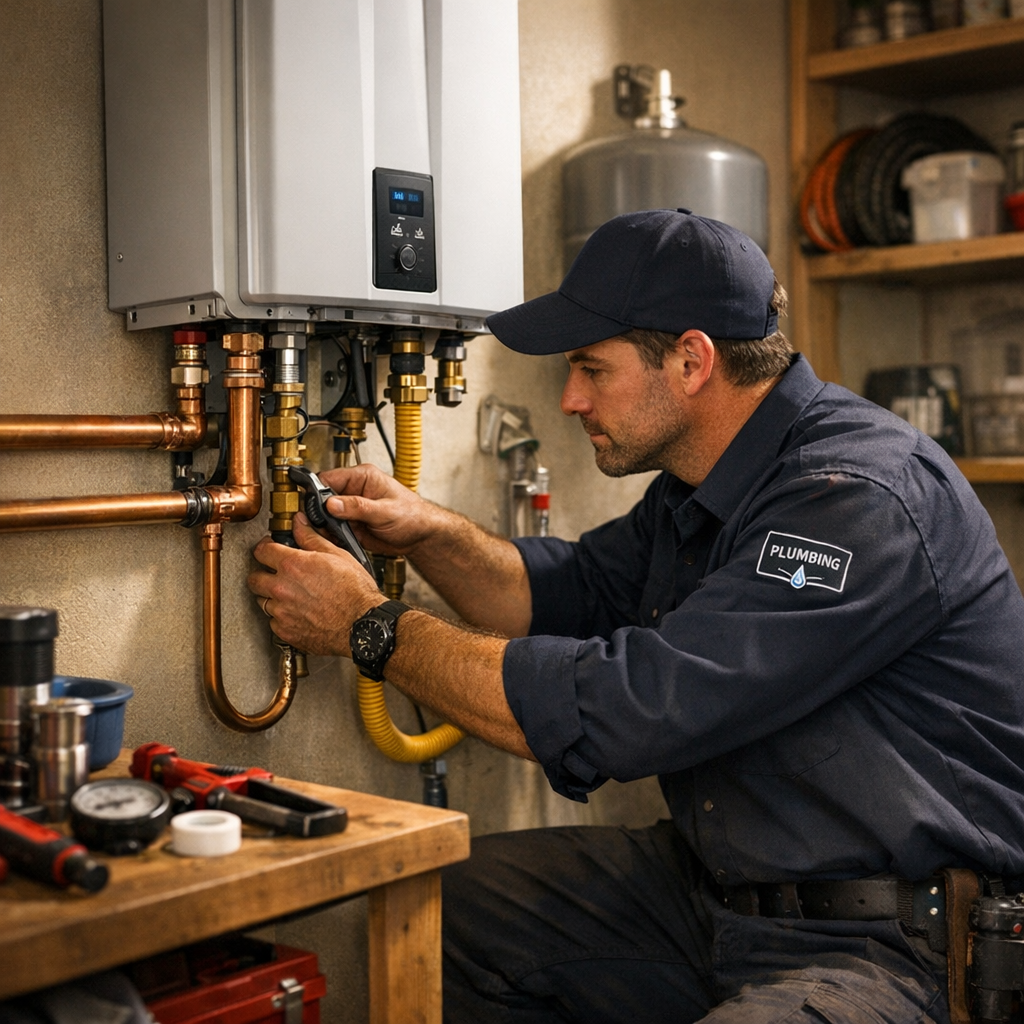
A tankless heater only heats water as you use it, which is why it is so efficient. The trade-off is that all of that water rushes through a compact heat exchanger with narrow channels. Every time hard water is heated, a little calcium and magnesium is left behind as a hard, crusty deposit called scale.
Month after month, that layer gets thicker. It insulates the heat exchanger, so the burner or heating element has to work harder to get your water hot. Flow through the unit slows down. Eventually the unit starts protecting itself — shutting down, throwing error codes, or delivering water that swings hot and cold. None of that means your heater is worn out. In most cases it just means it is overdue for descaling. Our Water Heater Services covers the service and maintenance work we do on both tankless and tank systems across Tulsa.
Signs Your Tankless Heater Is Overdue for Descaling
Your unit will usually tell you it needs attention before it quits outright. Watch for these signs:
- Water temperature that fluctuates during a shower — hot, then lukewarm, then hot again
- Hot water that does not get as hot as it used to, even at the same setting
- Reduced hot water flow at fixtures, especially when more than one is running
- Error codes or maintenance reminders on the unit’s display
- Rumbling, kettling, or louder-than-usual operation when the heater fires
- The unit shutting off mid-shower or mid-cycle
Any one of these is a reason to schedule descaling soon rather than at the next yearly mark. If the unit has shut down completely and will not restart, that is a service call, not a wait-and-see situation.
How Often Should You Descale? A Practical Guide for Tulsa Homes
Use this as a starting point, then adjust for what you actually see:
Once a year — the default for most homes
An average household in Tulsa, Broken Arrow, Owasso, Bixby, or Jenks with typical hot water use should descale annually. Pick a season and stick to it — many homeowners pair it with fall maintenance before Oklahoma’s colder months put more demand on the heater.
Every six months — heavy use or very hard water
Large families, homes that run laundry and showers back to back, and homes without any water treatment will build scale faster. Twice-a-year descaling is cheap insurance compared to a heat exchanger replacement.
Every 12 to 18 months — only with good water treatment
If you have a well-maintained water softener feeding the heater and your household’s hot water use is light, you may be able to stretch the interval a little. Even then, check the unit’s manual — many manufacturers tie warranty coverage to regular descaling, and going too long between services can put that coverage at risk.
If you are still deciding between systems, our guide to tankless water heaters in Tulsa — the honest pros and cons explains where maintenance like this fits into long-term ownership, and our breakdown of what 20 years of tankless vs. tank ownership really costs shows how routine service affects the math.
What Descaling Actually Involves
Descaling is not the same job as flushing a tank water heater, though the two are often confused. Flushing a tank drains sediment out of the bottom of a storage tank. Descaling a tankless unit circulates a descaling solution — typically a food-grade acid solution made for this purpose — through the heat exchanger to dissolve mineral buildup that has hardened onto its walls.
A typical service visit involves isolating the unit using its service valves, connecting a small pump and hoses, circulating the solution for a set period, then flushing the unit clean with fresh water and checking filters and operation before putting it back in service. If your unit does not have service valves installed, adding them at the first service makes every future descale faster and cleaner. For comparison, our article on how often you should flush a tank water heater covers the tank-side version of this maintenance.
What You Can Safely Check Yourself
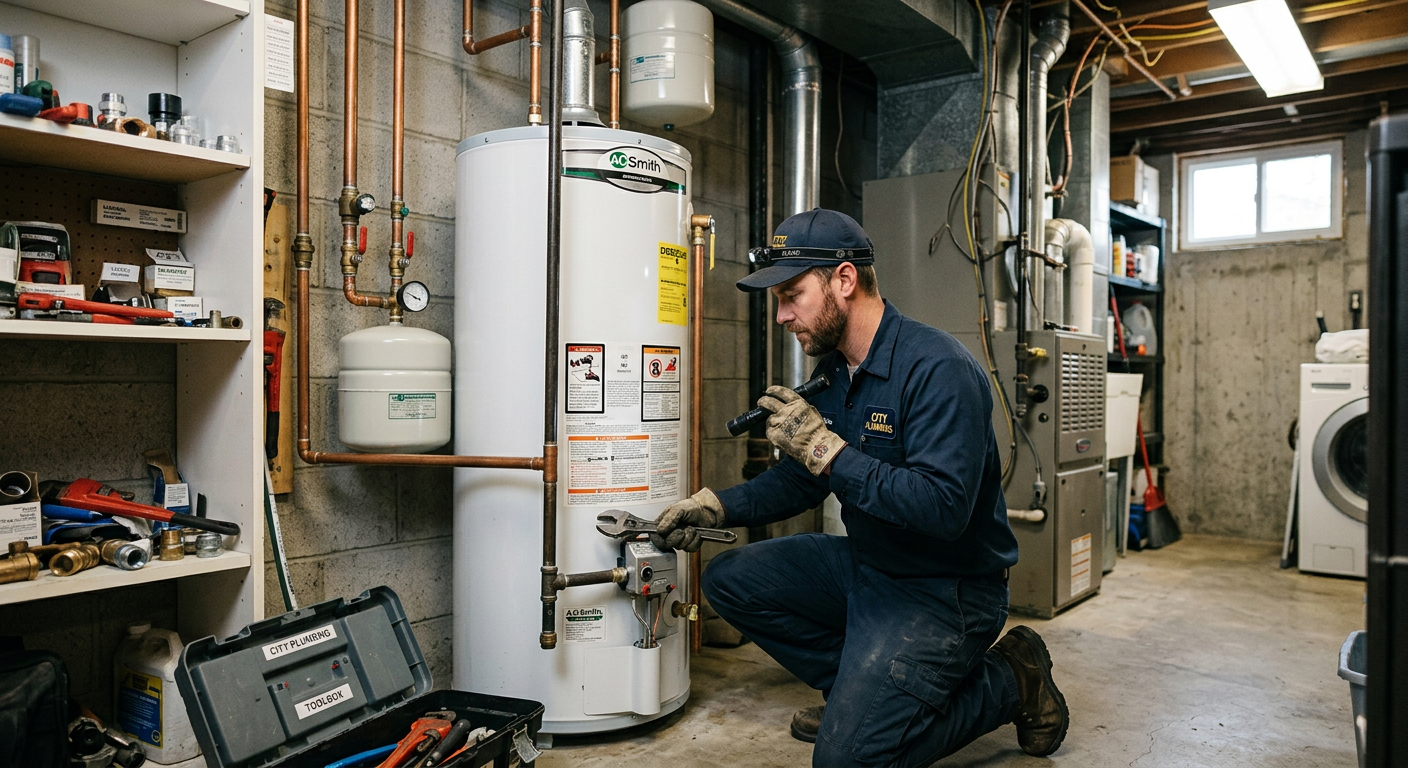
You do not need to descale the unit yourself to stay ahead of problems. Homeowners can safely:
- Read the error code on the display and check what it means in the owner’s manual
- Clean the inlet water filter or screen if your manual shows you how — a clogged screen mimics scale problems
- Note whether the problem happens at one fixture or throughout the house (one fixture often points to the fixture, not the heater)
- Keep the area around the unit clear and confirm the venting is unobstructed
- Write down when the unit was last descaled, so the next service is scheduled on time
What Needs a Professional
Leave the descaling itself, and anything beyond basic checks, to a licensed plumber if you are not fully comfortable with the unit’s valves, pump setup, and solution handling. Call a pro promptly if the unit is leaking, if you smell gas near a gas-fired unit, if error codes return right after a reset, or if the unit shuts down repeatedly. Working inside the unit, adjusting gas or electrical components, and replacing a scaled-up heat exchanger are not DIY jobs.
Costs vary with the unit and its condition, and many homeowners pay somewhere in the range of a routine service visit for a standard descale — call for an exact quote for your specific unit rather than relying on a generic range.
How to Slow Scale Buildup Between Services
You cannot eliminate scale in a hard-water area, but you can slow it down. A water softener or scale-reduction system ahead of the heater makes the biggest difference. Keeping the temperature setting moderate helps too — the hotter the setting, the faster minerals come out of the water. And simply staying on schedule matters most: light scale dissolves easily, while years of neglected buildup can permanently damage a heat exchanger.
Frequently Asked Questions
Is descaling the same as flushing?
No. Flushing drains sediment from a storage tank. Descaling circulates a solution through a tankless heat exchanger to dissolve hardened mineral deposits. Tankless units need descaling; tank units need flushing — sometimes a home with both needs both services.
What happens if I never descale my tankless water heater?
Efficiency drops first, then you get temperature swings, error codes, and shutdowns. Over time, heavy scale can damage the heat exchanger, which is one of the most expensive parts of the unit — and skipping required maintenance can affect warranty coverage.
Can I descale my tankless water heater myself?
Some homeowners with service valves already installed, the right pump kit, and a careful read of the manual do it themselves. If any of that is unfamiliar, have a plumber do it — an incorrect setup can leave solution in the unit or miss a failing component that a service visit would catch.
Keep Your Tankless Heater Running Like It Should
If your tankless water heater in Tulsa is due — or overdue — for descaling, Colossal Plumbing can help. Call us at (918) 553-0138 or reach us through our Contact / Get a Quote page. We are open Mon–Sat 7 AM–7 PM with 24/7 emergency service, and we serve Tulsa, Broken Arrow, Owasso, Bixby, Jenks, Sand Springs, Sapulpa, Claremore, and surrounding communities.
