
For most homes in Tulsa, flush a standard tank water heater once a year. That is the simple answer, and in a hard-water city it is not maintenance you can put off for years. If your household uses a lot of hot water, you keep the temperature set high, or your heater has already started making noise, do not stretch that schedule. Once a year is the longest you should go.
Tankless water heaters are different. There is no tank to drain, so instead of a flush they need descaling — running a cleaning solution through the heat exchanger to dissolve mineral buildup. In Tulsa’s hard water, plan on descaling a tankless unit about once a year too, and consider professional descaling if yours has no service valves, shows an error code, or has gone years without maintenance.
Why Sediment Builds Up in the First Place
Every tank water heater is, in a way, a mineral collector. The water coming into your home carries dissolved minerals. When that water is heated, some minerals come out of solution and settle to the bottom of the tank, right where a gas burner or an electric element applies the heat.
At first the sediment is loose and sandy, and a flush washes it out easily. Left alone, repeated heating bakes it into a harder layer. Water trapped under it can overheat and boil up through it, which is exactly why a water heater makes popping or rumbling noises. By the time you hear it, buildup has been growing for a while.
Why Tulsa Hard Water Makes It Worse
Water in the Tulsa area is generally hard, meaning it carries more dissolved minerals than soft water does. More minerals in means more sediment out, and it forms faster here than in a soft-water area. A tank heater in Tulsa that is never flushed collects that layer every day it runs.
That layer costs you. It insulates the bottom of the tank, so the heater runs longer to make the same hot water and efficiency falls. The extra heat stresses the tank lining and shortens its life. And as the layer thickens, usable space in the tank shrinks, so hot water runs out sooner.
Homes in Broken Arrow, Owasso, Bixby, and Jenks deal with the same water, and in winter, when incoming water is colder, a sediment-choked unit works harder still.
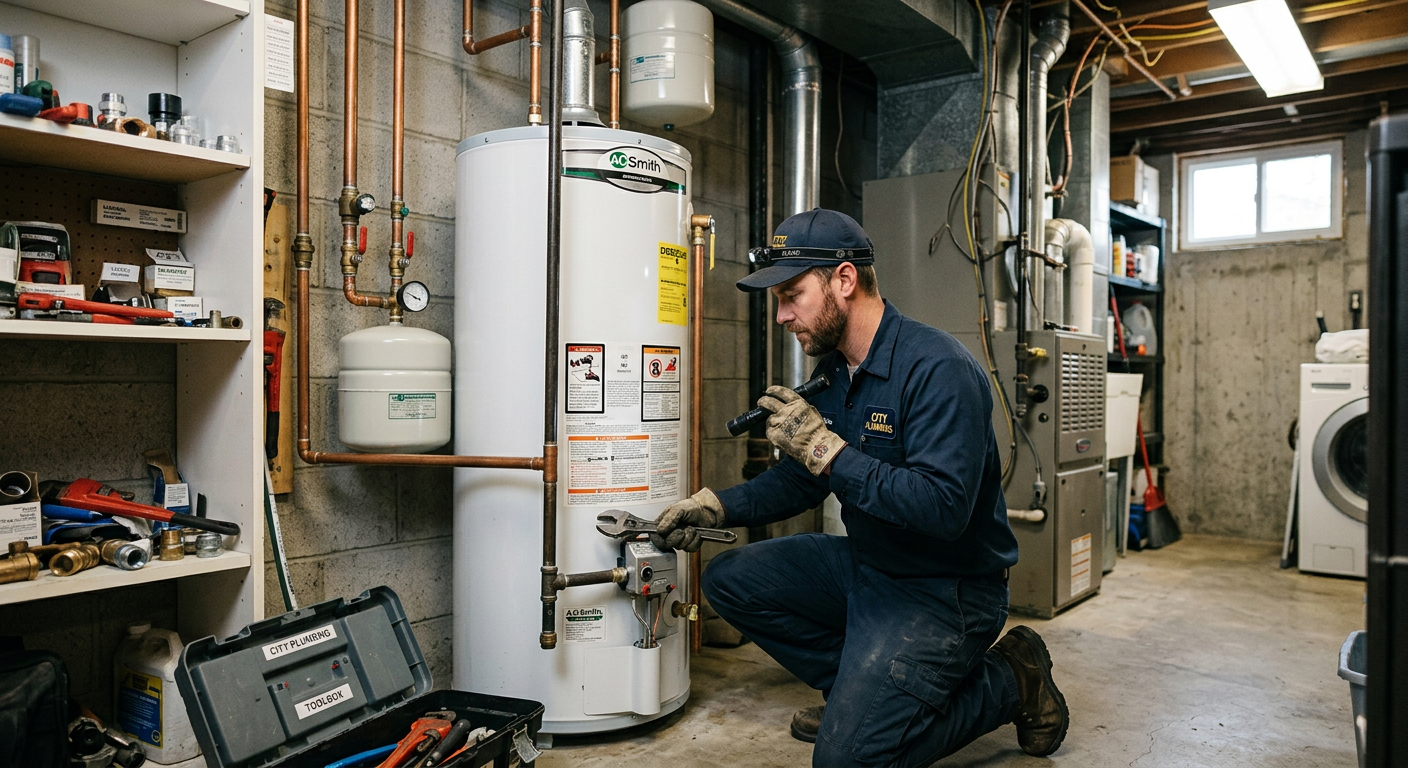
Signs Your Water Heater Is Overdue for a Flush
Your heater usually tells you it is past due. Watch and listen for:
- Popping, rumbling, or crackling while the unit is heating
- Hot water that runs out faster than it did a year or two ago
- Water that takes longer to get hot, or never quite gets there
- Cloudy or gritty water from a hot tap after the heater runs
- White mineral crust around the drain valve or the base
- No record — and no memory — of the heater ever being flushed
What You Can Safely Check Yourself
You do not need tools for the most useful checks:
- Listen while the heater fires and note whether any noise is new or getting louder.
- Look — without touching hot surfaces — for water, rust streaks, or crust at the base and drain valve.
- Check the age on the rating label on the side of the tank, and when it was last serviced.
- Check the temperature setting. Around 120 degrees Fahrenheit is most commonly recommended, and higher settings build sediment faster.
Stop there if you are unsure of the next step. Do not open a gas line, remove electrical covers, bypass the temperature-and-pressure relief valve, or force a corroded drain valve. Those are safety systems, not trim.
What Flushing a Tank Water Heater Actually Involves
A flush is not complicated, but every step has a safety reason behind it. In outline:
- Turn off the energy source — the breaker for an electric heater, or set a gas heater’s control to pilot or off.
- Close the cold-water shutoff valve feeding the heater, and open a hot tap in the house so the tank can drain.
- Connect a garden hose to the drain valve at the base and run it to a floor drain or another safe place for water to go.
- Open the drain valve and let the tank empty, then pulse the cold supply on and off to wash out loose sediment until the water runs clear.
- Close the drain valve, remove the hose, and refill the tank completely before restoring power or relighting the burner.
- Check the drain valve and fittings for drips once the heater is back up to temperature.
Two cautions deserve repeating. The water from that hose is hot enough to scald, so keep people and pets clear. And never restore power to an electric heater before the tank is completely full — an element switched on in an empty tank can burn out in moments. If a shutoff or drain valve will not move, stop and call a plumber rather than forcing it.
Tankless Water Heaters Need Descaling, Not a Tank Flush
A tankless unit heats water as it passes through a heat exchanger, and Tulsa’s minerals build up inside that exchanger instead of on a tank floor. The symptoms differ — fluctuating temperatures, reduced flow, or an error code — but the cause is the same hard water. Descaling means isolating the unit with its service valves and circulating a cleaning solution through it.
That job needs the right valves, a small pump, and the manufacturer’s procedure for your model, so many homeowners hand it to a pro. If you are weighing heater types, our guide to tankless water heaters in Tulsa: the honest pros and cons covers the maintenance each one really needs.

When Flushing Is Not Enough — and When to Call a Pro
Call a professional instead if the heater is older and has never been flushed, the drain valve is corroded or clogged, you see water or rust at the base, the pilot will not stay lit or a breaker keeps tripping, or you smell gas near a gas unit. A first flush on a long-neglected heater can stir up trouble, including a drain valve that will not reseal.
A plumber can also check parts a flush does not touch — the anode rod that sacrifices itself so the tank does not corrode, and the relief valve that protects the tank. See what that service covers on our Water Heater Services page. And if your heater is well into its expected life, be ready for an honest answer: sometimes the right call is planning a replacement before the tank fails at the least convenient moment.
Frequently Asked Questions
Can I flush my water heater myself?
Many homeowners do, and on a younger, regularly maintained tank it is manageable if you follow the safety steps above — power or gas off first, drained water treated as hot, tank refilled fully before anything is turned back on. If the unit is older, never flushed, or the drain valve looks corroded, have a plumber do the first one.
What happens if you never flush a water heater?
Sediment keeps building until the heater is noisy, slower, and more expensive to run, and the extra heat at the bottom of the tank shortens its life. Eventually it can lose capacity, struggle to keep up, or fail and leak years early. Skipping a flush does not save the work — it trades a maintenance visit for a replacement.
Does a water softener change how often I should flush?
It can help. A working softener removes much of the mineral load before it reaches the heater, so sediment builds more slowly and some homes can stretch the interval. Still look the unit over once a year and follow the manufacturer’s guidance — a softener is not a reason to forget the heater.
Not Sure When Yours Was Last Flushed?
If you cannot remember — or you bought a home in Tulsa, Sand Springs, Sapulpa, or Claremore and inherited a heater with no service history — have it looked at. Contact Colossal Plumbing for an honest assessment. Call (918) 553-0138 or visit our contact / Get a Quote page on colossalplumbing.com. We are open Monday through Saturday, 7 AM to 7 PM, with 24/7 emergency service.
