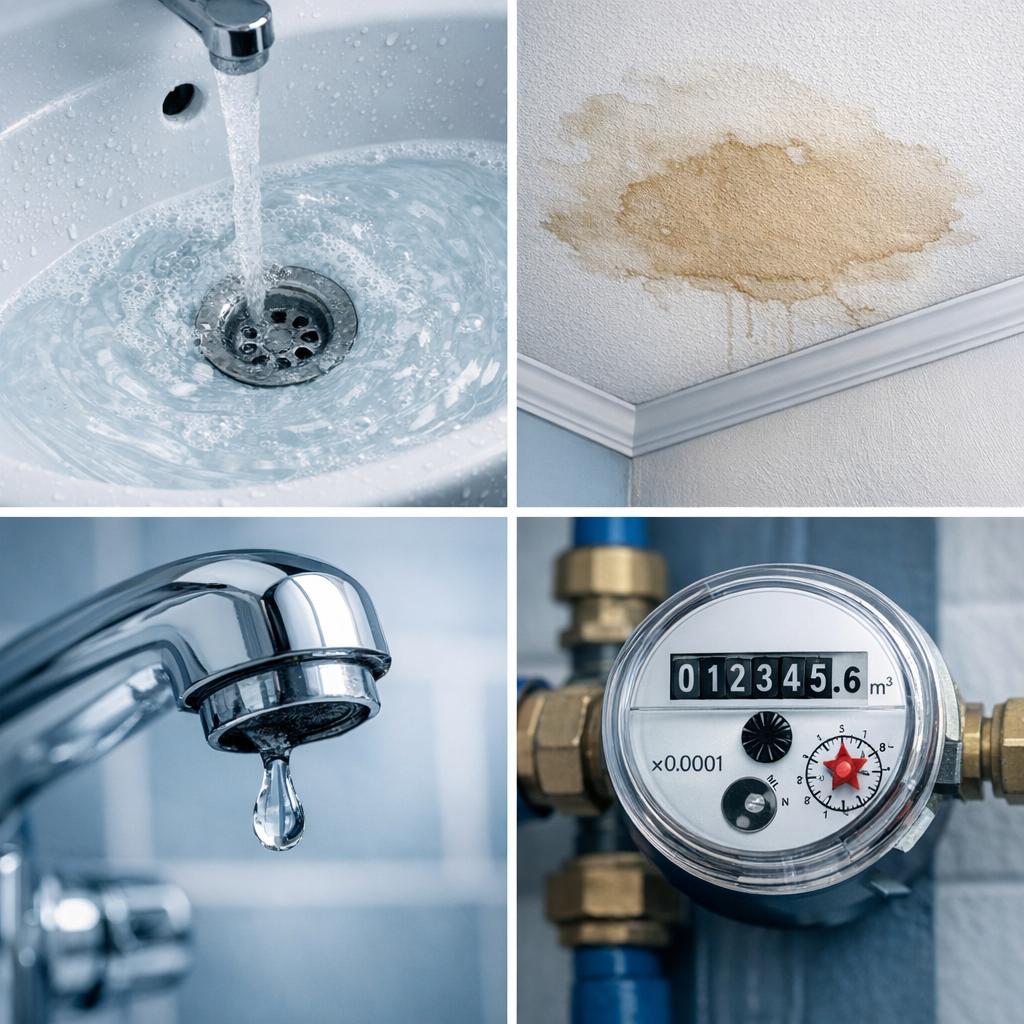
How to Recognize Early Signs of Plumbing Issues at Home
By Colossal Plumbing | Tulsa, OK
Most plumbing problems don’t announce themselves all at once. They start small — a faint smell, a slightly higher water bill, a drain that’s just a little slower than it used to be. And then, gradually or suddenly, a small problem becomes an expensive emergency.
The homeowners who avoid the worst plumbing disasters aren’t necessarily lucky. They’re observant. They know what to look for, and they act on what they find before a manageable issue becomes a major repair.
This guide covers the most important early warning signs that your home’s plumbing is trying to tell you something — and what to do when you spot them.
1. An Unexplained Increase in Your Water Bill
Your water bill is one of the most reliable early indicators of a plumbing problem. If your usage habits haven’t changed but your bill has climbed noticeably, water is going somewhere it shouldn’t be.
Even a small, continuous leak wastes a remarkable amount of water. A toilet with a leaking flapper can lose 200 gallons or more per day. A pinhole leak in a supply line behind a wall can run continuously for weeks or months before anyone notices — all while the water meter keeps turning and the bill keeps rising.
Pull out last month’s bill and compare it to the same month last year. A meaningful unexplained increase — more than 10 to 15 percent without a corresponding change in usage — warrants investigation. Before calling a plumber, check your toilets first. Add a few drops of food coloring to the toilet tank and wait 15 minutes without flushing. If color appears in the bowl, the flapper is leaking and needs to be replaced. If toilets are fine but your bill is still elevated, it’s time to have a professional check for hidden leaks.
2. Slow Drains
A drain that takes longer than usual to empty is easy to dismiss as a minor inconvenience — and in isolation, a single slow drain usually is. But slow drains are one of the most consistent early warning signs that something is developing inside your pipes.
A single slow drain is typically a localized clog — hair and soap buildup in a bathroom drain, grease accumulation in a kitchen drain. These are straightforward to clear but shouldn’t be ignored, because partial clogs tend to grow into full ones.
Multiple slow drains throughout the house simultaneously tell a different story. When your kitchen sink, two bathroom sinks, and the tub are all draining slowly at the same time, the problem is almost certainly in your main drain line rather than individual fixtures. Main line blockages can be caused by grease buildup, root intrusion, or a partial collapse of the line itself — and they require professional attention.
What to watch for: Any drain that takes noticeably longer to clear than it did a few months ago, particularly if the slowdown has been progressive rather than sudden.
3. Gurgling Sounds from Drains or Toilets
A gurgling sound from a drain or toilet — particularly when another fixture is running — is a sign that air is trapped somewhere in your drain system where it shouldn’t be. This almost always indicates a partial blockage or a venting problem.
Your home’s drain system relies on a network of vent pipes that allow air into the system, enabling wastewater to flow freely. When those vents are blocked — by debris, by a bird’s nest, or by a buildup of condensation and organic material — drains have to pull air from somewhere else, creating the characteristic gurgling sound.
If you hear gurgling in your toilet when you run the bathroom sink, or bubbles appear in the toilet bowl when you drain the tub, your drain venting system needs to be assessed. Left unaddressed, venting problems can eventually cause slow drains throughout the house and, in severe cases, allow sewer gases to enter your home.
4. Water Stains on Ceilings, Walls, or Floors
A water stain is one of the clearest signs that there’s a leak somewhere in your home — but it’s important to understand that the stain rarely appears directly where the leak is. Water travels along joists, pipes, and framing before it finds a place to accumulate and stain, which means the source of the leak can be some distance from where the damage is visible.
A brown or yellowish ring stain on a ceiling below an upstairs bathroom almost always indicates a leak from that bathroom — a failed wax ring, a leaking supply line, a cracked toilet base, or a slow drip from a pipe inside the floor. The stain may appear during or after someone uses the bathroom, or it may be present continuously.
Stains on walls can indicate leaking supply or drain pipes inside the wall cavity. Bubbling or peeling paint, soft spots in drywall, or a slight waviness to a painted wall surface are all signs that moisture has been present for some time.
Floor stains or soft spots — particularly near bathrooms, the kitchen, or the laundry room — can indicate a slow leak beneath the flooring that has been saturating the subfloor.
What to do: Don’t just repaint over water stains. Find the source. If you can’t identify it clearly, have a plumber investigate before the water damage — and potential mold — worsens.
5. The Sound of Running Water When Nothing Is On
If you can hear water running somewhere in your home when every faucet and appliance is off, that water is going somewhere it isn’t supposed to go.
Turn off every water-using appliance — washing machine, dishwasher, ice maker — and make sure every faucet is fully closed. Then listen carefully near walls, under floors, and in mechanical rooms. A faint hissing or rushing sound inside a wall is a strong indicator of a pressurized supply line leak. A continuous sound of flowing water near your water heater can indicate a failing pressure relief valve.
You can also check your water meter. Find your meter outside near the street and look at the small leak indicator — usually a small triangle, star, or dial — that turns even when flow is very slow. If it’s moving when all your fixtures are off, you have a leak somewhere in the system.
6. Low Water Pressure
A sudden drop in water pressure throughout your home is a symptom that demands attention. While a gradual decrease in pressure at a single fixture is often a sign of mineral buildup in the aerator — easily cleaned — a sudden or widespread pressure drop can indicate something more serious.
Possible causes of significant whole-home pressure loss include:
- A leak in the main supply line between the meter and your home
- A partially closed or failing main shut-off valve
- A pressure-reducing valve (PRV) that is failing or needs adjustment
- A significant hidden leak inside the home that is diverting pressurized water before it reaches your fixtures
Low pressure that affects only hot water can indicate a failing water heater or a partially closed isolation valve on the heater’s cold water inlet. Low pressure at a single fixture almost always indicates a clogged aerator or showerhead that can be cleaned or replaced.
What to watch for: Any meaningful pressure change that you notice across multiple fixtures or that develops suddenly rather than gradually.
7. Sewage or Rotten Egg Odors
Plumbing is designed to be a closed system — wastewater flows away from your home through sealed pipes, and sewer gases are exhausted through roof vents. When you smell sewage inside your home, that closed system has been compromised somewhere.
The most common cause of sewage odors indoors is a dry P-trap — the curved section of pipe beneath sinks, floor drains, and other fixtures that holds a small amount of water as a seal against sewer gas. Rarely used fixtures like basement floor drains or guest bathroom sinks can dry out, allowing gas to pass freely into your living space. The fix is simple: run water in unused fixtures for 30 seconds every few weeks to keep the trap full.
More concerning odors — persistent sewage smell that isn’t resolved by running water in unused fixtures, or a sulfur smell that seems to come from walls or floors — can indicate a cracked drain line, a failing wax ring under a toilet, or a damaged sewer vent. These require professional diagnosis.
A rotten egg smell specifically associated with your hot water can indicate bacteria growth inside a water heater that hasn’t been flushed recently — particularly common in homes where a water softener is used with a tank water heater.
8. Discolored Water
The color of your water tells you a lot about what’s happening inside your pipes.
Rust-colored or brown water from cold taps indicates corrosion in your supply pipes — a sign that galvanized steel pipe is deteriorating and may be approaching the end of its serviceable life. This is common in older Tulsa homes that still have original galvanized plumbing.
Rust-colored water only from hot taps typically points to corrosion inside your water heater tank — a sign that the anode rod has been depleted and the tank lining is beginning to rust. It usually means the water heater is nearing the end of its life.
Blue-green staining on fixtures or in the toilet bowl indicates acidic water that is slowly corroding copper pipes. This type of corrosion causes pitting inside the pipe walls and can eventually lead to pinhole leaks.
Cloudy or milky water that clears from the bottom of a glass up is usually dissolved air — common after plumbing work and typically harmless. Cloudiness that doesn’t clear within a minute or two warrants further investigation.
9. Visible Mold or Mildew in Unusual Places
A small amount of mold or mildew in a shower is common and expected in a humid environment. Mold appearing on walls, ceilings, or floors away from obviously wet areas is a different matter — it almost always indicates a hidden moisture source.
Because mold requires consistent moisture to grow, its presence in an unusual location tells you that water has been present there repeatedly or continuously. Behind-wall leaks, slow subfloor leaks, and condensation from poorly insulated pipes are all common culprits. Mold visible on the exterior of a wall is typically only the surface of a larger colony growing inside the wall cavity.
If you find mold in an unexpected location — particularly if it keeps coming back after surface cleaning — have a plumber check for a hidden water source before investing in mold remediation. Treating the mold without finding the moisture source is a temporary solution at best.
10. Cracks in Your Foundation or Walls
This is the late-stage warning sign — one that indicates a plumbing problem has been going on for some time without being caught.
A slab leak — a leak in the pressurized supply lines or drain lines that run beneath your home’s concrete foundation — saturates the soil under and around the slab over time. As that soil shifts and settles unevenly in response to moisture changes, it stresses the foundation. The result can be visible cracks in concrete floors, foundation walls, and even in the drywall above — cracks that seem to have appeared from nowhere.
If you notice new cracking in your foundation or floors in combination with any other plumbing symptoms — high water bills, warm spots on the floor, the sound of running water — a slab leak is a serious possibility. Slab leaks are one of the more damaging and expensive plumbing problems a home can face, but they’re significantly more manageable when caught early.
What to Do When You Spot a Warning Sign
The right response to an early warning sign is simple: don’t ignore it and don’t wait to see if it gets better on its own. Plumbing problems don’t resolve themselves. They develop, worsen, and eventually become emergencies.
A call to a licensed plumber at the first sign of a problem is almost always less expensive than waiting. Catching a slab leak early rather than after months of hidden damage. Clearing a partial drain blockage before it becomes a sewage backup. Repairing a supply line before it fails completely and floods a room.
Colossal Plumbing serves homeowners throughout the Tulsa metro area — including Broken Arrow, Owasso, Bixby, Jenks, Sand Springs, Sapulpa, Claremore, Catoosa, Collinsville, Glenpool, and surrounding communities. We’re available for routine inspections and service calls Monday through Saturday, and our emergency line is staffed 24 hours a day, 7 days a week.
Call (918) 553-0138 at the first sign of a problem — before it becomes a bigger one.
Colossal Plumbing — Licensed, bonded, and insured for residential and commercial plumbing throughout Oklahoma. Serving the Tulsa metro since 2001.
