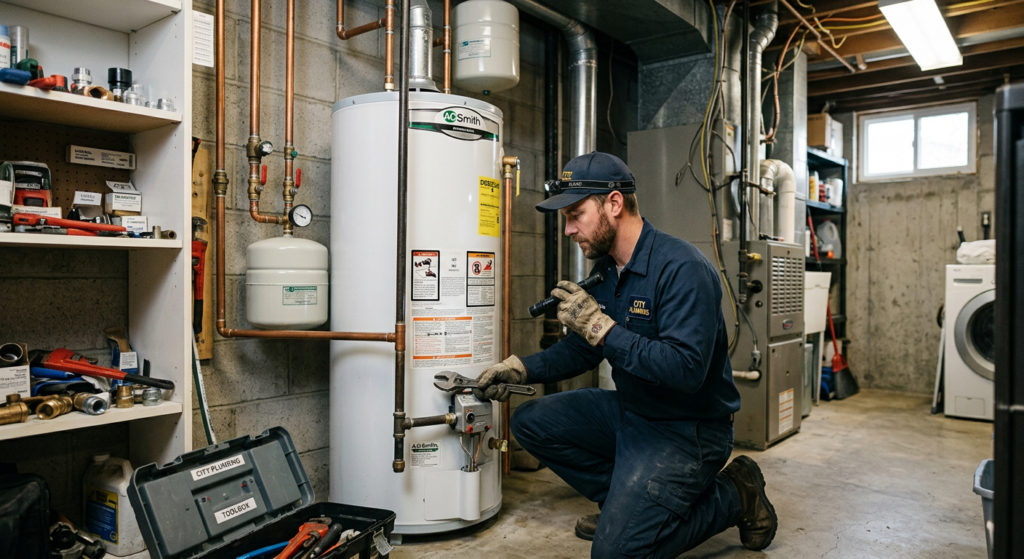
If you keep running out of hot water, the short answer is this: most Tulsa families of three to four people do well with a 40- to 50-gallon tank water heater, while smaller households of one to two people often do fine with 30 to 40 gallons. Larger families, or homes with a soaking tub, multiple bathrooms, or back-to-back showers, usually need 50 to 65 gallons or more — or a tankless system sized for how much hot water you use at the same time.
Tank size alone is not the whole story, though. What matters most is how much hot water your home needs during its busiest hour, and whether the heater can keep up and recover. This guide walks through how plumbers size a water heater, how tank and tankless sizing differ, and how Tulsa water and Oklahoma winters factor in — so you can choose with confidence instead of guessing.
The quick sizing guide for tank water heaters
For a conventional tank heater, use your household size and bathroom count as a starting point:
- 1 to 2 people, 1 to 1.5 bathrooms: 30 to 40 gallons
- 2 to 3 people, 1.5 to 2 bathrooms: 40 gallons
- 3 to 4 people, 2 to 2.5 bathrooms: 40 to 50 gallons
- 4 to 5 people, 2.5 to 3 bathrooms: 50 to 60 gallons
- 5 or more people, 3+ bathrooms: 60 to 80 gallons, two heaters, or tankless
These are typical starting ranges, not guarantees. Two families of four can use hot water very differently. One takes quick showers spread through the morning. The other runs two showers, the dishwasher, and a load of laundry all before 8 a.m. The second family needs the bigger tank — or a different type of heater — even though the head count is the same.
If you are replacing an existing heater and you never run out, matching the current size is usually safe. If you regularly run out, step up one size if your space and venting allow it, or talk through tankless options. Our Water Heater Services page covers the tank and tankless options we install across Tulsa.
Why the First Hour Rating matters more than gallons
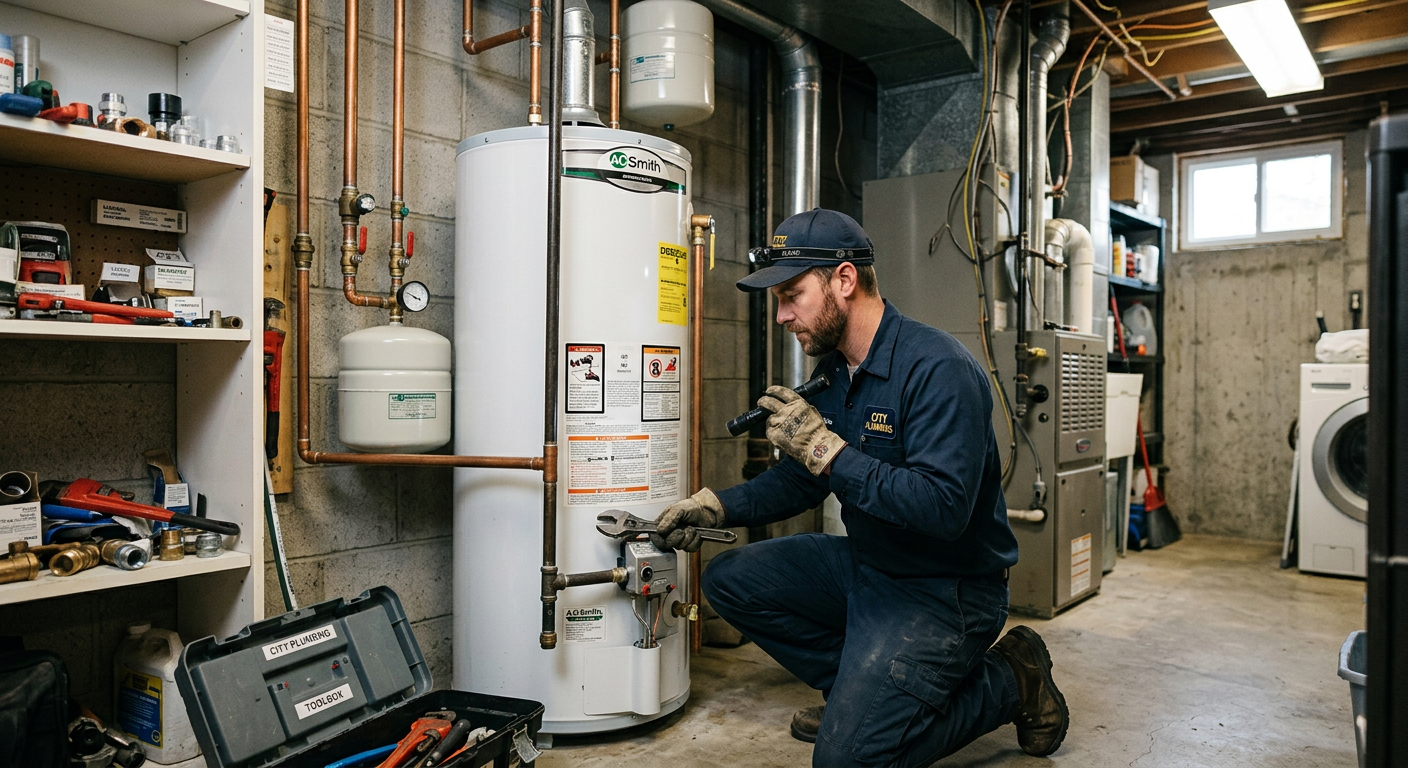
Here is the number homeowners miss: the First Hour Rating, or FHR. It is printed on the yellow EnergyGuide label and in the manufacturer’s specs, and it tells you how much hot water the heater can deliver in one busy hour, starting with a full tank.
A 50-gallon tank does not deliver only 50 gallons of hot water in that first hour, because the burner or elements reheat water while you use it. A 50-gallon gas heater might have an FHR of 75 to 85 gallons, for example, while an electric model of the same size often recovers more slowly and has a lower FHR. Those figures are examples of how ratings work — always check the FHR on the specific model you are considering.
To use FHR, estimate your peak hour. Count what happens in your busiest 60 minutes: showers are the big one (plan on roughly 10 to 20 gallons of hot and warm water mixed per shower depending on length and showerhead), a bath takes more, especially a deep soaking tub, the dishwasher and a hot laundry load each add a meaningful share. Add up that hour, and look for a heater whose FHR meets or slightly exceeds it. If your math lands well above every tank’s FHR, that is a sign to look at a larger tank, a high-recovery model, or tankless.
Tankless sizing is completely different
Tankless heaters have no gallons to count. They are sized by flow rate — gallons per minute, or GPM — and by temperature rise: how far the unit has to raise incoming water temperature to reach your set point, usually around 120 degrees.
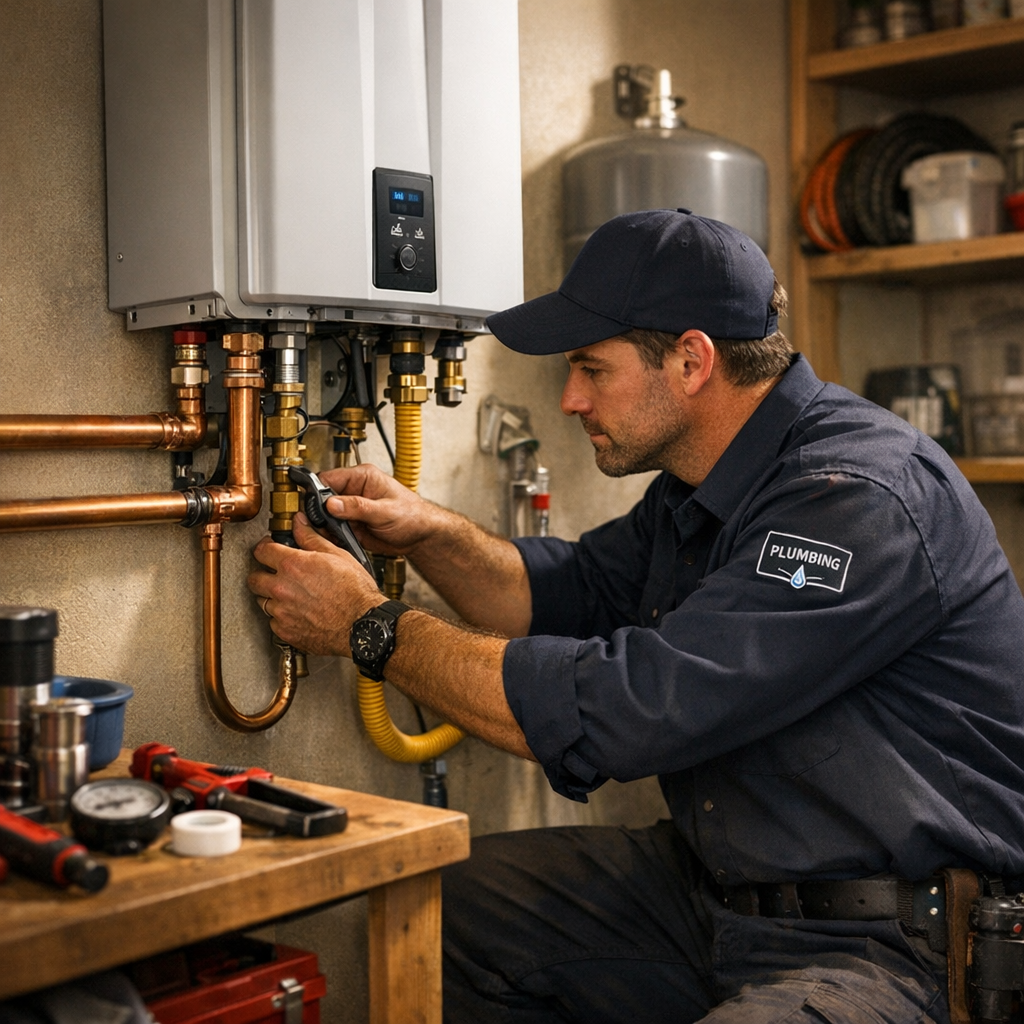
That second part matters in Tulsa in winter. When incoming water is colder in January, a tankless unit has to work harder, so it delivers fewer gallons per minute than its best-case summer rating. A unit advertised at a high GPM in mild conditions will deliver less on a cold morning when two showers and a faucet run at once.
Add up the fixtures you realistically run at the same time — for example, two showers plus a bathroom sink — and size for that simultaneous demand, not for every fixture in the house. If you are weighing this route, our guide to tankless water heaters in Tulsa: the honest pros and cons walks through where tankless shines and where a tank is still the simpler choice. A good installer will do this math with your actual winter conditions, not just the box’s headline number.
Signs your current water heater is too small
You may not need a sizing chart at all — your mornings may already be telling you:
- The last shower in line is lukewarm or cold
- You have to space out showers, laundry, and dishes on a schedule
- Hot water runs out faster than it did a few years ago
- Guests or a new baby, teenager, or family member moving in tipped you over the edge
One caution: running out faster than you used to does not always mean “too small.” Sediment buildup in the tank, a failing heating element or burner, or a thermostat issue can all shrink the hot water you actually get from a correctly sized heater. Before you buy bigger, it is worth ruling those out — start with our homeowner checklist for no hot water in Tulsa, and check the age of your unit against our guide to how long a water heater lasts in Tulsa.
Tulsa factors that change the answer
Hard water and sediment
Tulsa-area water is hard enough that mineral sediment collects in tank heaters over time. That layer takes up space in the tank and insulates the water from the burner, so an older 50-gallon heater may effectively deliver noticeably less than it did when new. Regular flushing helps, and it is one reason an older home in Tulsa, Broken Arrow, or Owasso can feel “undersized” even when nothing about the family changed.
Your home’s layout and fixtures
Older Tulsa homes often have the heater in a closet, garage, or attic with tight clearances, which can limit how large a tank will physically fit or vent safely. Newer homes in places like Bixby, Jenks, and Broken Arrow more often have large primary-suite soaking tubs and multi-head showers that draw a lot of hot water at once. Bring those fixtures into the conversation — they change the right size more than square footage does.
Fuel type and recovery
Gas heaters generally recover — reheat a tank of water — faster than standard electric models. If your peak hour is intense but short, a gas 50-gallon with a strong FHR can outperform a larger electric tank. If you are switching fuel types, that involves venting, gas line, or electrical work that a licensed plumber needs to evaluate in person.
What you can safely check yourself
- Read the label on your current heater: gallons, fuel type, age, and model. Photograph it for reference.
- Find the First Hour Rating on the EnergyGuide label or look the model up online.
- Write down your real peak hour: who showers when, and what else runs at the same time, for one typical weekday morning.
- Measure the space where the heater sits — height, width, and door clearance — so you know what will fit.
Leave the rest to a pro: gas connections, venting, electrical work, permits and code requirements, and safely draining and removing the old unit. Sizing is also the moment to check whether your home needs an expansion tank and whether the drain pan, shutoffs, and pressure relief are in good shape.
What a professional sizing visit involves
When we size a heater, we ask about family size, bathrooms, tubs, and your peak-hour habits, check the current unit’s label and condition, measure the install space, and confirm fuel, venting, and code requirements. Then we recommend a size — and sometimes the honest recommendation is the same size you already have, with a repair or a flush instead of a replacement. You will get the price up front before work begins, and most standard replacements are straightforward once the right unit is chosen.
Frequently asked questions
Is a 40-gallon water heater enough for a family of four?
Often, yes — if showers are reasonably spread out and there is no large soaking tub in the peak hour. If your family of four takes back-to-back showers while laundry or dishes run, a 50-gallon tank with a higher First Hour Rating is usually the safer fit.
Can I just install the biggest tank that fits?
Not always, and not always wisely. An oversized tank costs more to buy and keeps more water hot around the clock, and physical fit, venting, and fuel supply may limit you anyway. The goal is the smallest heater that comfortably covers your peak hour, not the largest one on the shelf.
Does tankless really never run out?
A correctly sized tankless heater does not run out the way a tank does, because it heats water as you use it. But if more fixtures run at once than its winter flow rating can handle, water temperature can dip. Sizing for simultaneous use is what makes tankless feel endless in practice.
Not sure what size your home needs?
You do not have to figure this out from a label in a closet. Colossal Plumbing can check your current heater, do the peak-hour math with you, and recommend the right size in a tank or tankless unit for your home in Tulsa, Broken Arrow, Owasso, Bixby, Jenks, Sand Springs, Sapulpa, Claremore, and nearby communities. Call us at (918) 553-0138 — we are open Monday through Saturday, 7 AM to 7 PM, with 24/7 emergency service — or reach us through the contact / Get a Quote page on colossalplumbing.com. Honest sizing, upfront pricing, and hot water that actually keeps up.
