
If your shower starts warm and fades, your dishes never quite feel clean, and the bath is more tepid than relaxing, you do not have a hot water heater problem in name only — you have lukewarm water, and that is a clue, not just an annoyance. Lukewarm water usually means the heater is making some heat but not enough, not delivering it, or mixing too much cold water in along the way.
The good news is that the pattern often points to the cause. Whether the problem shows up at every faucet or only in one shower, whether it started suddenly or crept in over months, and whether you have a tank or tankless unit all narrow it down before anyone picks up a wrench.
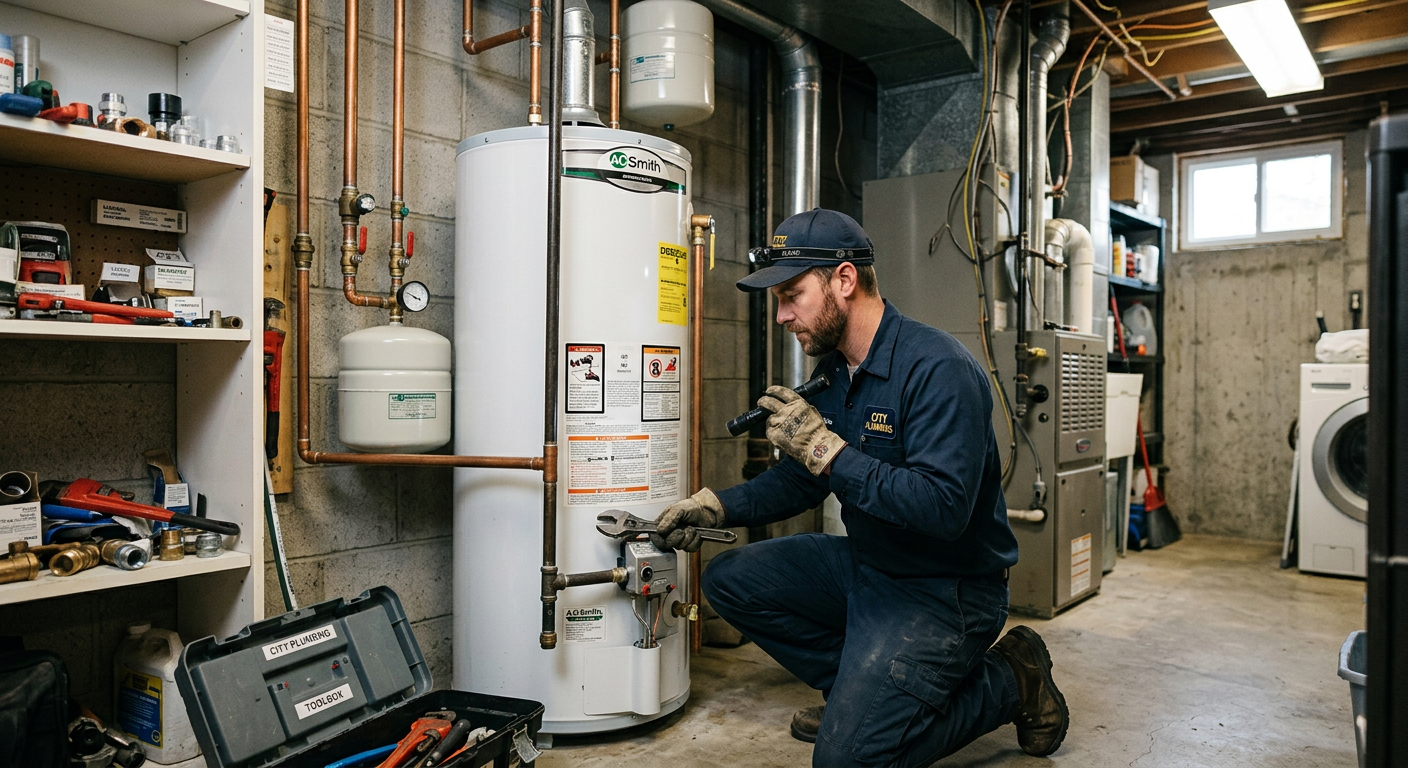
First, notice where and when it happens
Start with a simple comparison. Run the hot tap by itself at a bathroom sink, then at the kitchen sink, then in the shower. If every fixture is lukewarm, the problem is likely at the water heater or in a mixing point that affects the whole house. If only one shower or faucet is lukewarm, look at that fixture first — a worn shower cartridge or a single-handle faucet can blend in cold water even when the heater is working fine.
Timing matters too. Lukewarm water first thing in the morning, after the heater has had all night to recover, points more toward temperature, heating, or sediment trouble. Water that starts hot and turns lukewarm quickly during a shower points more toward capacity, a damaged dip tube, or one heating element that is no longer doing its share.
The most common causes of lukewarm hot water
The thermostat is set too low — or is failing
Every tank heater has a temperature setting, and sometimes it has simply been turned down, bumped, or set low to save energy. For most homes, around 120 degrees is the commonly recommended balance of comfort and safety — see our guide to what temperature you should set your water heater to for why going much higher is not the answer. A thermostat can also fail or drift, so the dial says one thing while the water in the tank sits well below it.
One heating element has burned out (electric heaters)
Most electric tank heaters have two elements: an upper and a lower. When the lower element burns out, the tank can still make some warm water, but it runs out fast and never reaches the heat it should. When the upper element fails, you may get a small amount of warm water and then very little. The result in both cases often feels exactly like this topic — not stone cold, just never properly hot.
Sediment has built up in the tank
Tulsa water carries minerals, and over time those minerals settle in the bottom of a tank heater as sediment. That layer sits between the burner or element and the water, forcing the heater to work harder to push heat through. You may hear popping or rumbling, notice slower recovery after a shower, and get water that struggles to reach temperature. Regular flushing helps — a neglected tank in a hard-water area can lose a surprising amount of useful capacity to what is sitting in the bottom of it.
The dip tube is broken or worn
Inside a tank, a dip tube carries incoming cold water to the bottom so the hot water at the top can be drawn off first. If that tube cracks or breaks, cold incoming water mixes near the top of the tank instead. The classic symptom is a shower that starts hot and turns lukewarm or cool far too quickly, even though the heater itself may be heating normally.
Cold water is crossing over into the hot side
A failing single-handle shower valve, a worn faucet cartridge, or another mixing point can let cold water cross into the hot line. When that happens, every hot tap can feel diluted. This is one of the most overlooked causes because the water heater tests fine — the problem is happening downstream, where hot and cold meet.
The heater is undersized for new demand
A new teenager taking longer showers, a houseguest, a soaking tub, or running laundry and the dishwasher at the same time can expose a tank that was marginal to begin with. The heater may be healthy but simply too small, so it delivers warm water and then gives up. Sizing is worth checking before replacing parts on a unit that is actually doing its job.
Tankless heaters have their own version of this
A tankless unit that needs descaling, has a dirty inlet filter, or is being asked for more flow than it can heat at once can deliver water that never quite gets hot, or that fluctuates. Hard water makes descaling a regular need in the Tulsa area. If you are weighing the two styles, our article on tankless water heaters in Tulsa: the honest pros and cons explains how differently they behave when demand spikes.

What you can safely check yourself
Check the temperature setting first and note what it says — do not simply crank it to the maximum, because very hot water is a scald risk, especially for children and older adults. Compare fixtures as described above, and write down whether the problem is whole-house or single-fixture, sudden or gradual. For an electric heater, you can look — without touching wiring — to see whether a breaker has tripped. For a gas heater, you can note whether the pilot is lit by looking through the sight glass if your model has one.
You can also think about what changed: a new shower valve, recent plumbing work, a new appliance, or guests arriving can all be the real story. That history helps a plumber diagnose faster. Stop there, though. Do not remove heater panels, test elements, adjust gas components, or drain a tank you are unsure about — hot water, electricity, and gas are a combination that deserves respect, and a tank that has not been maintained can have a pressure relief valve that needs checking before it is drained.
If you have no hot water at all rather than lukewarm water, work through our no hot water checklist first — it covers the urgent version of this problem.
When it is time to call a pro
Call for help if the water is lukewarm at every fixture, if it is getting worse week by week, if you hear new popping or rumbling, if you see rusty water, leaks, or corrosion around the tank, or if the heater is older and this is one of several new symptoms. A plumber can test thermostats and elements, check for crossover at fixtures, inspect the dip tube, flush sediment safely, and descale a tankless unit with the right equipment.
That testing matters because the fixes are very different. A thermostat or element is a repair. A broken dip tube on a young tank may be worth repairing, while the same symptom on an old, sediment-filled tank may be a sign to talk about replacement instead. Guessing and swapping parts can cost more than a proper diagnosis. You can see what is covered on our Water Heater Services page.
A Tulsa note: winter makes this worse
Oklahoma winters make a marginal heater feel worse, because incoming water is colder. A heater fine in September can feel lukewarm by November — worth checking.
Frequently asked questions
Why is my hot water warm but not hot enough for a shower?
Usually a thermostat set too low or failing, a burned-out lower element, sediment, or cold water crossing over through a shower valve.
Can I just turn the water heater up to fix lukewarm water?
Raising it a little can help if it was set too low, but do not use a very high setting to mask a failing part.
Does lukewarm water mean my water heater is dying?
Not always — a crossover valve, thermostat, or one element can cause it on a healthy heater.
Get properly hot water back
If your Tulsa-area home has settled for lukewarm water, contact Colossal Plumbing for help diagnosing the real cause. Call (918) 553-0138 — we are open Mon–Sat 7 AM–7 PM with 24/7 emergency service, and we serve Tulsa, Broken Arrow, Owasso, Bixby, Jenks, Sand Springs, Sapulpa, Claremore and the surrounding area.
