If you are wondering what temperature to set your water heater to, here is the straight answer: set it to 120°F for most Tulsa homes. That is the setting we recommend first for most households, and it is hot enough for showers, laundry, and everyday washing without making the water at the tap needlessly risky.
Why 120°F? It balances three things at once: safety, energy use, and comfort. Water much hotter than that raises the risk of scalding, especially for kids and older adults, and the heater works harder and wastes more energy keeping a tank hot. Much lower, and showers can feel lukewarm, cleaning can suffer, and for a tank heater, stored water can be less effectively discouraged from bacterial growth. Some households, and some dishwashers that do not heat their own water, may do well at 120 to 125°F — but for most homes, 120°F is the sensible starting point.
Why 120 Degrees Works for Most Homes
Safety first
Scalding is the main reason not to simply turn the dial up. Hot water can burn skin faster as the temperature climbs, and young children and older adults are often less able to move away quickly or judge how hot water feels before they are under it. At 120°F, you still need to be careful — this is hot water, not warm water — but you have reduced an unnecessary risk compared with a much higher setting.
Energy and comfort
A water heater loses heat even when nobody is using hot water, and the hotter it keeps the tank, the more energy it tends to use just staying ready. Turning a too-hot heater down to around 120°F will not transform a bill overnight, but as a typical tendency, a lower setting usually means less wasted heat and less work for the heater. Comfort matters too: 120°F at the heater should still give you a hot shower once it is mixed at the tap.
A note on dishwashers and stored water
Some dishwashers expect incoming water around this range, while others heat water themselves — check the manual for yours before changing the heater just for the dishwasher. And do not solve a lukewarm-water problem by dropping the setting far below 120°F. Cooler stored water is not the goal. If the water is not hot enough at 120°F, something else is usually going on, and that is worth diagnosing rather than masking.
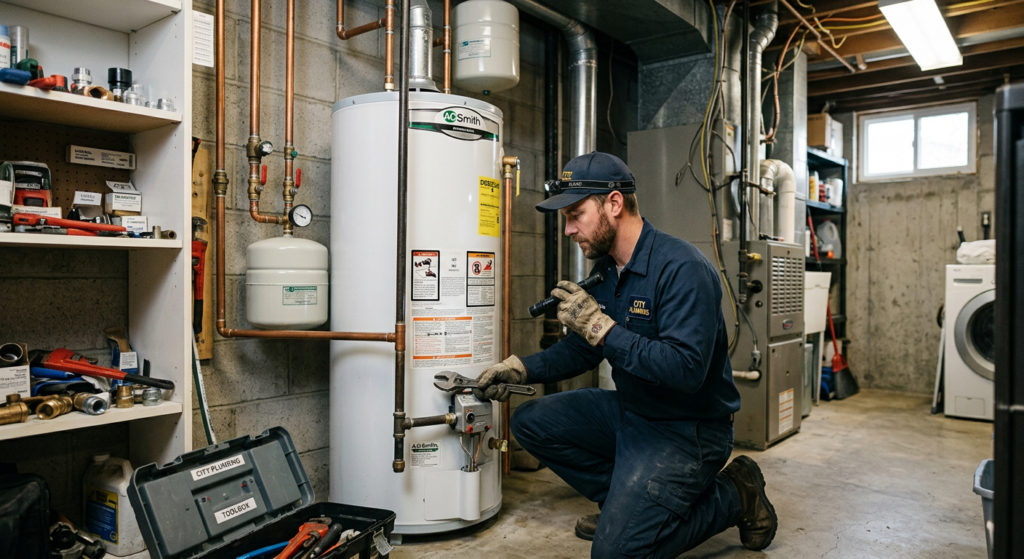
How to Find and Adjust the Setting
The control looks different depending on the type of heater. Make only small changes, wait several hours for the temperature to stabilize, and then test at the tap. Never force a dial or ignore a warning label on your unit.
Gas tank water heater
Look low on the front of the tank for the gas control dial, near the burner access. It may show numbers, words such as Warm and Hot, or a marked range. Turn it gradually toward the setting closest to 120°F — many dials have a notch in that area, but markings vary by brand. If the dial does not move easily, the pilot is out, or you smell gas, stop and call a professional. Do not open gas lines or burner compartments yourself.
Electric tank water heater
Electric tank heaters usually have two thermostats, one for the upper element and one for the lower, behind access panels on the side of the tank. Both should be set the same. Be most careful with this type: power must be off at the breaker before any panel comes off, and there are live electrical connections inside. Unless you are completely sure what you are doing, leave opening the panels and adjusting these thermostats to a pro.
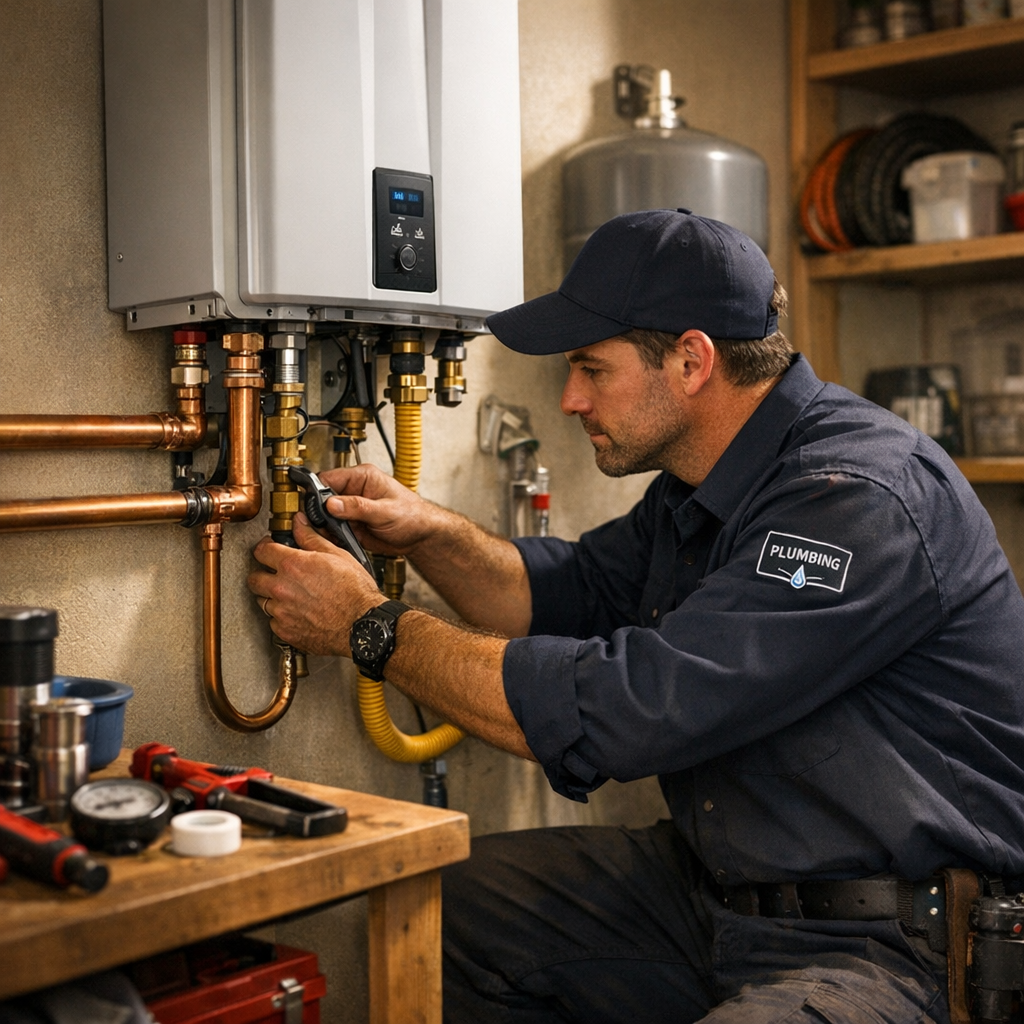
Tankless water heater
A tankless unit is simpler on the surface. Most have a digital control on the front of the unit or a remote control that lets you raise or lower the outlet temperature in small steps. Set it to 120°F and test at the tap. If you are weighing a tankless unit against a tank, our guide to tankless water heaters in Tulsa: the honest pros and cons for homeowners walks through that choice. If the display shows an error or the temperature swings, note the code and call for service rather than repeatedly resetting it.
How to Test the Actual Tap Temperature
The dial is a setting, not a guarantee. To check what you really get, let the hot water run at a kitchen or bathroom tap for a couple of minutes until it feels fully hot and steady. Hold a kitchen thermometer under the running stream and let it settle. That reading is the number that matters for safety and comfort in daily use.
If the tap reading is a few degrees off the setting, that can be normal, especially where water travels a long way through the house. If it is far hotter or far cooler, wait, retest once, and then treat it as a clue — the thermostat, an element, or sediment may be affecting the result.
Signs the Setting or Thermostat Is Off
- Water that scalds quickly, or that needs a lot of cold mixed in for a normal shower, may be set too high.
- Water that is only lukewarm, even with the hot handle fully open, is not right at 120°F.
- Hot water that runs out much faster than it used to can point to a failing element, a thermostat problem, or sediment taking up room in the tank.
- Temperatures that swing from hot to cold during one shower are worth checking, not just living with.
A Tulsa Note on Hard Water and Winter
Two local factors come up often here. Tulsa-area water is generally hard, and its minerals can build up as sediment in a tank. That layer makes the heater work harder and can affect how evenly it heats, which is one reason regular flushing matters — see our guide to how often you should flush your water heater in Tulsa. In winter, incoming water is colder too, so the heater works harder to reach the same temperature and showers can feel like they run out sooner. That alone is not a reason to crank the setting well above 120°F.
What You Can Check Yourself — and What Needs a Pro
Safely check yourself: read the dial or display, test the tap temperature with a thermometer, notice leaks, rust, or new noises without touching anything hot, and check how old the unit is — our article on how long a water heater lasts in Tulsa can help. For repairs or replacement options, start with our Water Heater Services page.
Call a pro for: opening electric panels, gas controls or burner problems, a leaking tank, a relief valve issue, repeated temperature swings, or any sign of scorching, gas smell, or electrical trouble. Those are not dial adjustments.
Frequently Asked Questions
Is 140°F too hot?
For most homes, yes — it raises scald and energy concerns without a comfort benefit most families need. Unless a pro has advised it for a specific system, stay near 120°F.
Should I turn it up in winter?
Usually not. Colder incoming water makes the heater work harder, but raising the setting raises scald risk too. If winter showers are not hot enough at 120°F, get the heater checked instead.
Why is my water still lukewarm at 120°F?
The thermostat or an element may be failing, sediment may be reducing capacity, the tank may be undersized for demand, or hot and cold may be crossing somewhere in the plumbing. A test at the tap is the first step.
Not Sure Your Heater Is Holding 120°F?
Call Colossal Plumbing at (918) 553-0138 or use the contact / Get a Quote page on colossalplumbing.com. We are open Mon–Sat 7 AM–7 PM with 24/7 emergency service, and we serve Tulsa, Broken Arrow, Owasso, Bixby, Jenks, Sand Springs, Sapulpa, and Claremore. If your water is scalding, lukewarm, or swinging hot and cold, we can check the setting and the heater itself — and give you an exact quote in person if work is needed.
