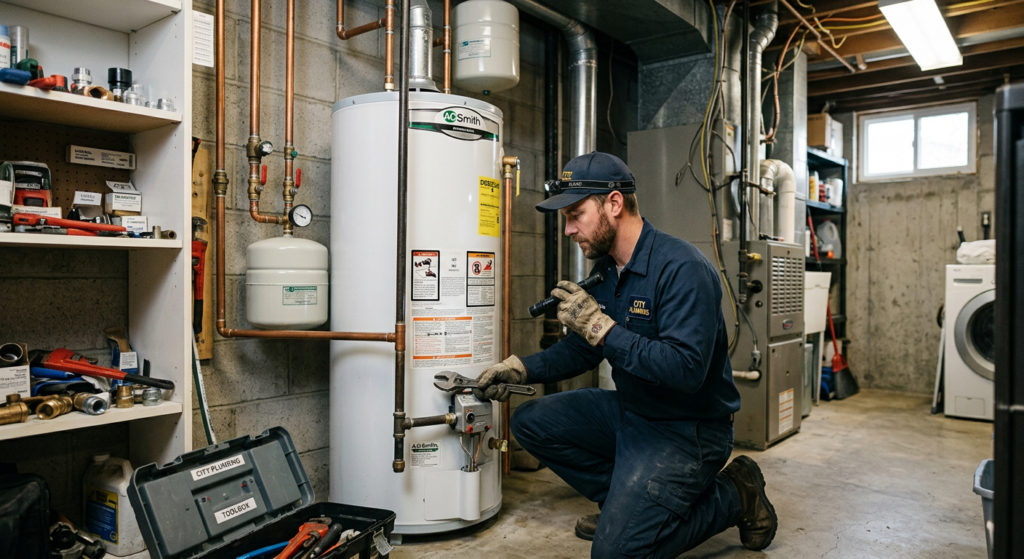
If you turned on the shower this morning and got nothing but cold water, you are not alone — no hot water is one of the most common calls we get in Tulsa. The good news is that the cause is sometimes simple: a tripped breaker, a pilot light that went out, a thermostat setting that got bumped, or a tank that simply ran out after a houseful of showers and laundry. The checklist below will help you sort the simple fixes from the problems that really do need a plumber.
Work through it in order and do not skip the safety notes. Some checks take thirty seconds and need no tools at all. Others — anything involving opening a gas line, removing electrical covers, or bypassing a safety valve — are not homeowner jobs. Knowing which is which can save you time, and it helps you describe exactly what is happening when you do call.
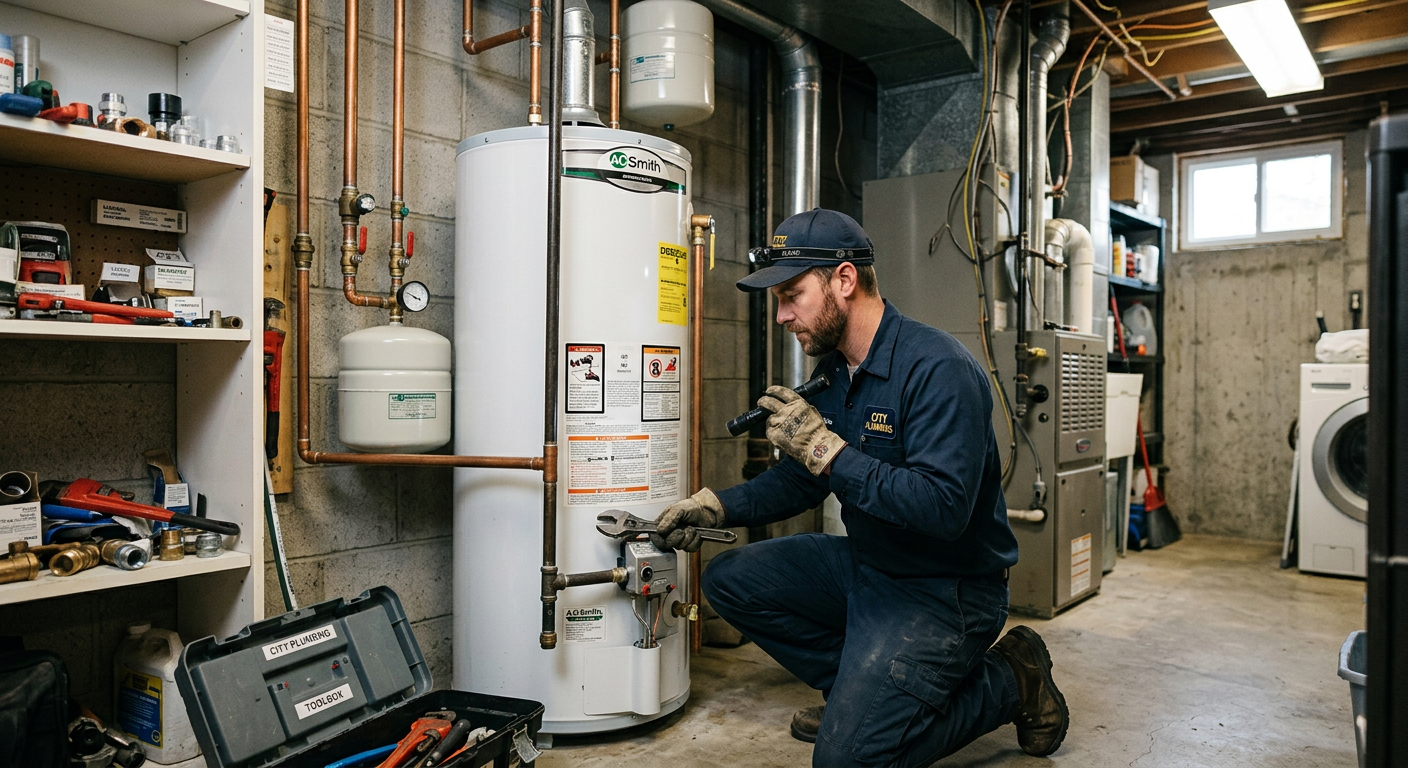
First Question: Is It the Whole House or Just One Fixture?
Start here, because it narrows everything down fast.
If you have no hot water at every faucet and shower in the house, the problem is almost certainly at the water heater itself — power, gas, ignition, or the unit has failed.
If only one shower or faucet has no hot water while the rest of the house is fine, the problem is usually at that fixture — a cartridge, mixing valve, or a local shutoff — not the water heater.
Also check whether the water is completely cold, lukewarm, or hot but running out very fast. Those are three different problems. Completely cold points to no heating at all. Lukewarm often points to a thermostat, a heating element, or a dip tube issue. Hot water that runs out fast often points to sediment, an undersized tank, or heavy use all at once. If that last one sounds familiar, our guide to how long a water heater lasts in Tulsa and the warning signs it is about to fail is worth a read alongside this checklist.
The Homeowner’s Checklist — Step by Step
1. Check the Temperature Setting
Look at the thermostat dial on a gas tank heater (usually low on the front of the tank) or note the setting if yours has a digital control. Around 120 degrees Fahrenheit is the setting most commonly recommended for balancing comfort, safety, and efficiency.
Settings get knocked during cleaning, storage moves, or work in a garage or utility closet — especially in Tulsa homes where the heater shares space with everything else in the garage. If the dial is set to “Vacation,” very low, or off, that alone explains cold water. Turn it back to a normal hot setting and give the tank time to recover — a full tank does not reheat instantly.
Do not turn it far above 120 to “make it hotter faster.” That raises scald risk and makes the unit work harder without fixing an underlying fault.
2. If Yours Is Electric: Check the Breaker
An electric water heater runs on its own circuit. Go to your electrical panel and look for a tripped breaker labeled for the water heater. A breaker that has tripped to the middle or off position cuts power completely, and the water goes cold as the stored hot water is used up.
If the breaker has tripped once, you can reset it once: turn it fully off, then back on, and wait to see if hot water returns. If it trips again — stop. A breaker that keeps tripping is telling you there is an electrical fault, often a failing heating element shorting out. Do not keep resetting it, and do not remove the heater’s access covers to poke at elements or wiring. That is a pro job.
Also, many electric tanks have a small red reset button on the upper thermostat behind a cover. Because reaching it means working around live electrical components, we recommend most homeowners leave that step to a plumber unless they are genuinely comfortable and know how to shut off power first.
3. If Yours Is Gas: Check the Pilot and the Gas Control
On a gas tank heater, look through the small viewing window near the bottom (follow your manufacturer’s instructions for your model). Is the pilot lit?
A pilot that has gone out is a common reason for a sudden loss of hot water, and many modern heaters have lighting instructions printed right on the tank. If you are comfortable following those printed instructions exactly, relighting a pilot is a task many homeowners do. If your unit has electronic ignition instead of a standing pilot, it will usually show a status light or error code — note what it says.
Stop and call a professional right away if you smell gas (a rotten-egg odor), hear hissing, or the pilot will not stay lit after one careful attempt. A pilot that keeps going out often points to a thermocouple or gas control problem, not just a draft. Never open a gas line or bypass a safety control to keep a pilot going.
Also confirm the gas control knob has not been turned to off or pilot-only, and that other gas appliances in the house are working. If nothing gas-powered works, the issue may be with the gas supply to the home, not the heater.
4. If Yours Is Tankless: Check for an Error Code and Water Flow
A tankless water heater heats water only when it senses flow. When it shuts down, it usually tells you why with an error code on its display — write that code down before you reset anything, because it helps a plumber diagnose the unit quickly.
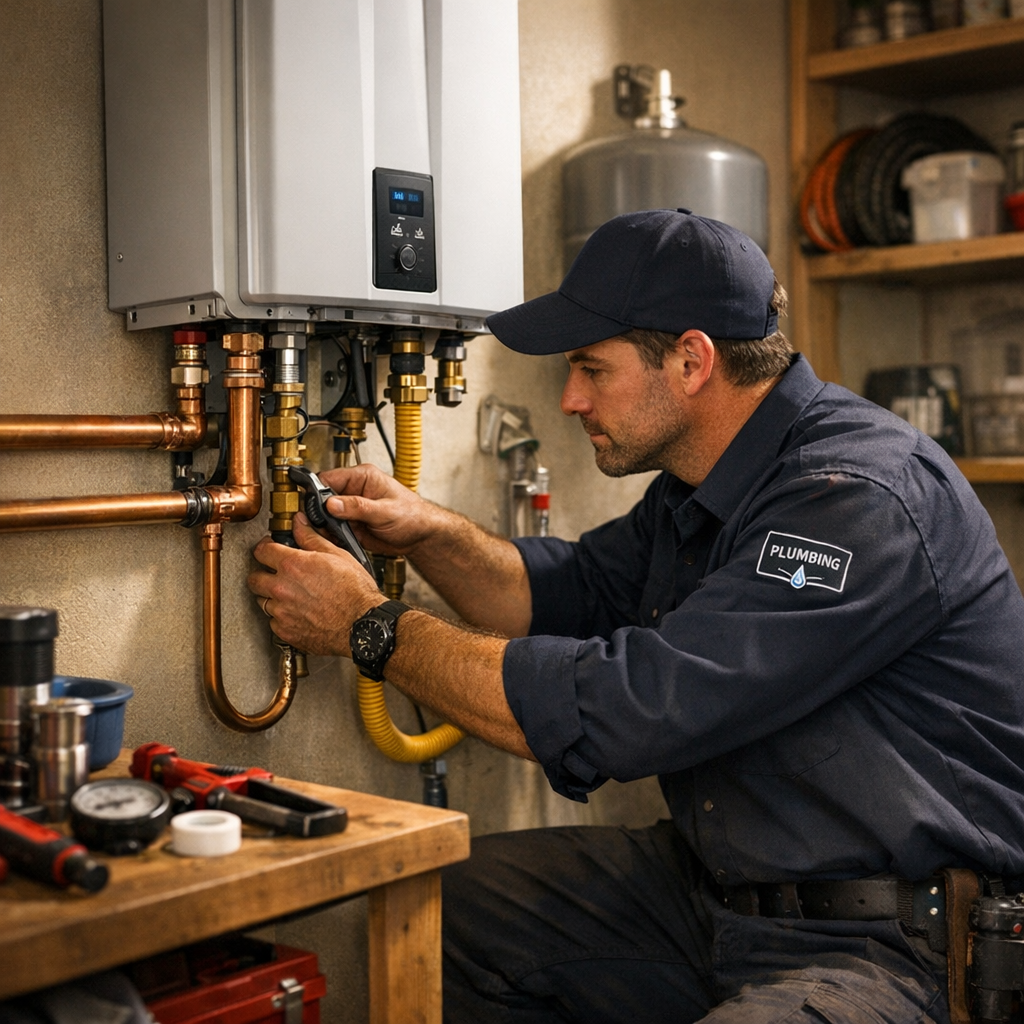
Homeowner-safe checks for tankless units: make sure the power is on and the unit has not been unplugged, the gas or electrical supply is on, and you are actually running enough hot water to trigger it (a barely cracked faucet may not). Check that no hot-water tap was left running elsewhere that is confusing demand.
In Tulsa, hard water is a frequent tankless culprit: mineral scale builds up in the heat exchanger until the unit overheats, fluctuates, or shuts off to protect itself. If your tankless unit has not been descaled in a long time and temperatures swing hot to cold, scale is high on the list. Our article on tankless water heaters in Tulsa: the honest pros and cons explains why that maintenance matters so much here. Descaling involves pumps, valves, and solutions — many homeowners have a pro handle it.
5. Look for Leaks, Water, and a Closed Shutoff Valve
Take a quick, careful look around the heater — do not touch anything hot. Is there water on the floor, in the pan, or dripping from pipes above the tank? A leak does not always cause no hot water, but a major leak or a failed tank can, and water damage gets worse by the hour.
Check that the cold-water shutoff valve into the heater is open. If the heater was recently serviced, or work was done nearby, a partly closed valve can starve the unit. And if you recently had plumbing work in a Broken Arrow, Owasso, Bixby, or Jenks home — a bathroom remodel, a fixture swap — ask whether a local shutoff was left closed.
If you see active leaking from the tank body itself, shut off the water to the heater if you can do so safely and call for help. A leaking tank cannot be patched.
6. Rule Out Simple Demand: Did the Tank Just Run Out?
A conventional tank holds a fixed amount of hot water. Back-to-back showers, a filling bathtub, the dishwasher, and laundry in the same hour can empty it — especially a smaller tank serving a growing family. The clue is timing: the water was hot earlier, faded during heavy use, and comes back after 30 to 60 minutes of no use.
If that pattern repeats every day, the issue may be size or capacity loss from sediment rather than a total failure. Sediment takes up space at the bottom of the tank and insulates the water from the burner, so you get less usable hot water and those popping and rumbling sounds we covered in why your water heater is making popping or rumbling noises. Flushing and a capacity check are the next step, not panic.
What Needs a Pro — Do Not Guess at These
Call a plumber rather than continuing the checklist if you notice any of the following: a gas smell or a pilot that will not stay lit; a breaker that trips again after one reset; water leaking from the tank body; rusty hot water along with no heat; scorch marks, melted wiring, or a sizzling sound; a relief valve that keeps discharging; or an error code that returns after a tankless reset. Those are safety systems speaking up.
Common professional findings behind “no hot water” include a failed heating element or thermostat on an electric unit, a bad thermocouple or gas control valve on a gas unit, a worn dip tube, heavy sediment, ignition or venting faults on a tankless unit, and — on an older tank — a heater that has simply reached the end of its life. A pro visit typically involves confirming power or gas, testing the components in order, checking for leaks and safety issues, and then giving you a clear repair-versus-replace picture before any major work begins.
For the full range of repair, tank installation, tankless service, leaking heater help, and anode rod replacement, see our Water Heater Services page.
Frequently Asked Questions
How long should I wait for hot water to come back after resetting a breaker or relighting a pilot?
Give a tank heater time to heat a full tank — often around 30 to 60 minutes before you judge it, depending on tank size and how cold the water in it is. A tankless unit should produce hot water as soon as it is running normally and a hot tap is open.
Why do I have hot water in the morning but none in the evening?
That pattern usually points to capacity, not a total failure: heavy evening use draining the tank, sediment reducing usable capacity, or one of two electric elements failing so the tank reheats too slowly. Note the pattern — it helps with diagnosis.
Can no hot water be dangerous?
The cold water itself is not, but some causes are worth urgent attention: gas smells, repeated breaker trips, active leaks, or a relief valve discharging. If you see any of those, stop troubleshooting and call a professional. If you smell gas strongly, leave the area and call your gas utility or emergency services first.
No Luck with the Checklist? We Can Help Today
If you have worked through this checklist and still have no hot water in Tulsa — or you hit one of the stop signs above — contact Colossal Plumbing for help. Call (918) 553-0138 or visit our contact / Get a Quote page on colossalplumbing.com. We serve Tulsa and the surrounding communities, including Broken Arrow, Owasso, Bixby, Jenks, Sand Springs, Sapulpa, and Claremore. We are open Monday through Saturday, 7 AM to 7 PM, with 24/7 emergency service, so a cold shower on a Sunday does not have to wait until Monday.
