
Finding water pooling around your water heater is never a welcome surprise — especially late at night. Here is what to do right now: turn off the water supply to the heater, turn off its power or gas if you can do so safely, and contain the water with towels, a mop, or a bucket. Then call a plumber. A leaking water heater will not fix itself, and even a slow drip can flood a garage or utility closet fast.
The good news is that not every leak means you need a new water heater. Sometimes the fix is a loose connection or a worn valve. Other times — especially when the tank itself is leaking — replacement is the honest answer. This guide covers the first steps, how to find where the water is coming from, and what to expect when a plumber arrives.
First, Do These Four Things Right Now
Work through these in order — they limit the damage while you wait for help.
- Turn off the water to the heater. Find the cold-water shutoff valve on the pipe going into the top of the tank and turn it clockwise until it stops. If there is no valve, shut off the main water supply to the house instead.
- Turn off the power or gas — but only if it is safe to do so. For an electric heater, switch off its breaker before touching anything near standing water. For a gas heater, turn the gas control knob to “Off” or “Pilot.” If you smell gas at all, skip this step.
- Contain the water. Lay down towels, mop up what you can, and put a bucket under the discharge pipe from the relief valve. Move boxes, rugs, and valuables away from the water, and stay out of water spreading toward outlets or electrical equipment.
- Call a plumber. If the water is spreading fast or you cannot stop it, treat it as urgent. Colossal Plumbing offers 24/7 emergency service, so you do not have to wait until morning.
Two safety rules are worth repeating: never step into standing water around an electric water heater until the breaker is off, and if you smell gas, leave the house and call your gas company or emergency services from outside.
How to Tell Where the Leak Is Coming From
Once the water is off and the area is safe, dry the floor around the heater with towels and watch where the water comes back. The location tells you a lot about what is wrong.
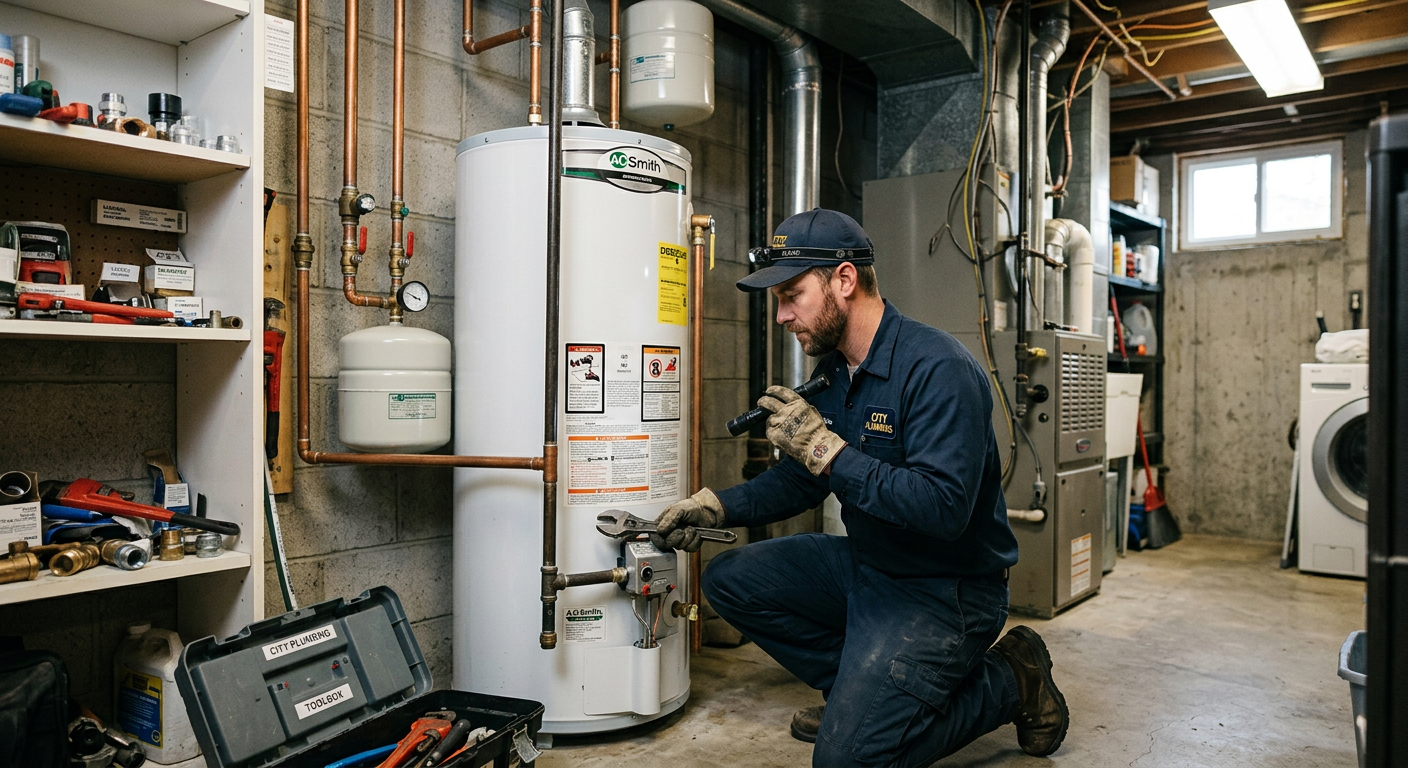
Leaking from the top: connections and fittings
Water dripping from the pipes or fittings on top of the heater usually points to a loose or corroded connection where the cold-water inlet or hot-water outlet meets the tank. Tulsa’s hard water can speed up corrosion on fittings. The good news: connection leaks are often repairable. A plumber can tighten, reseal, or replace the fitting without replacing the whole unit.
Leaking from the temperature and pressure (T&P) relief valve
The T&P valve sits on the side of the tank near the top, with a pipe running down toward the floor. It releases water when pressure or temperature inside the tank gets too high. A few drips can mean the valve is doing its job or wearing out; a steady stream needs a professional look. Never cap, plug, or remove the discharge pipe — that valve is there to keep the tank safe.
Leaking from the drain valve
The drain valve is the small spigot near the bottom of the tank, used to flush sediment out during maintenance. If it drips after a flush, sediment may be keeping it from sealing, or the valve may be worn. Tightening it sometimes stops the drip; otherwise the valve needs replacing, a straightforward repair.
Leaking from the tank itself
Water seeping from the bottom seam of the tank, or rust-colored water with no fitting nearby, usually means the steel tank has corroded through from the inside. Once the tank itself is leaking, there is no reliable patch — the pressure inside the tank will find the weak spot again. That is the point where replacement is the right call. Read more about how long a water heater lasts in Tulsa and the signs it is nearing the end.
What You Can Safely Check Yourself — and What Needs a Pro
There is plenty a homeowner can do safely: turn off the water and power, mop up, note exactly where the water is coming from, and snap a photo of the leak and the heater’s label — the model and age help your plumber a lot. Leave anything involving gas lines, electrical wiring, or removing panels to a licensed plumber.
Why a Leaking Tank Usually Means Replacement
A conventional tank water heater is a steel tank with a glass lining, protected by an anode rod that sacrifices itself to corrosion so the tank does not have to. Once that lining fails and the steel starts to rust through, the tank is done — no sealant or patch holds up to the pressure and heat inside a water heater for long. Leaks at a valve or a connection, by contrast, are localized problems: fix the part, and the heater can keep serving you for years. If replacement is on the table, our water heater services page explains the options.
What a Professional Visit Typically Involves
When a Colossal Plumbing technician arrives, here is what usually happens:
- Find the source. We confirm where the water is coming from and whether the tank, a valve, or a connection is at fault.
- Check the whole system. We look at water pressure, the anode rod, sediment buildup, and the age and condition of the unit.
- Explain your options. Repair or replace, with honest pricing before any work starts.
- Replace if needed. We drain and remove the old unit, install the new one to code, test it, and haul the old one away.

Preventing the Next Leak
You cannot make a water heater last forever, but a little maintenance goes a long way — especially in Tulsa, where hard water leaves sediment that settles in the tank and speeds up wear.
- Flush the tank once a year to clear sediment. Here is how often you should flush your water heater in Tulsa and why it matters.
- Have the anode rod checked every few years and replaced when it is worn out — it protects the tank from rust.
- Watch the age of your heater and warning signs like rusty water, rumbling noises, or dampness around the base.
- Before an Oklahoma cold snap, protect pipes near the heater and know where your water shutoff is.
Frequently Asked Questions
Is a leaking water heater an emergency? If water is spreading, you cannot stop it, or it is near anything electrical, yes — call right away. A small drip you can contain is still a same-day problem — tank leaks only get worse.
Can I still use hot water if it is leaking a little? It is best not to. Using hot water keeps the tank refilling, which can make the leak worse and waste water. Turn the water off to the heater and call a plumber instead.
How long can I wait to fix a leaking water heater? As little time as possible. A slow drip can become a burst tank without much warning, and water damage only gets more expensive.
Need a Plumber in Tulsa? Call Colossal Plumbing
If your water heater is leaking in Tulsa, Broken Arrow, Owasso, Bixby, Jenks, Sand Springs, Sapulpa, or Claremore, Colossal Plumbing can help. Call (918) 553-0138 or request a quote through our Get a Quote page. We are open Monday through Saturday, 7 AM to 7 PM, with 24/7 emergency service.
