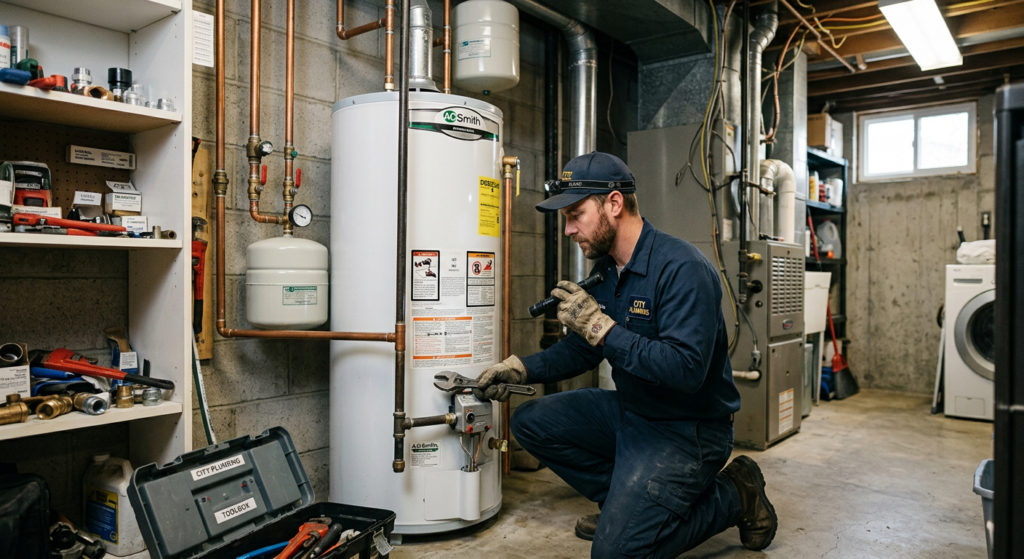
If your shower starts warm and turns lukewarm — or flat-out cold — halfway through, you are not imagining it, and you are not necessarily out of hot water for the whole house. A tank water heater only holds a limited amount of ready hot water. Once you use it faster than the heater can recover, cold water coming into the tank mixes in and the temperature at the shower drops. In many Tulsa homes the problem is not one big failure. It is a combination of a tank that is a little too small for current use, sediment taking up space inside the tank, a thermostat or heating element that is not keeping up, or several fixtures running at the same time in the morning rush.
That is actually good news, because most of those causes can be identified. Some you can check safely yourself in a few minutes. Others — especially anything involving gas, electricity inside the tank, or opening the unit — need a licensed plumber.
The most common reasons hot water runs out fast
1. Your tank is simply undersized for how you live now
Families grow, and hot water habits change with them. Teenagers take longer showers. A soaking tub or an extra bathroom gets added. Guests stay over. A 40-gallon tank that was fine for two people will struggle for five, especially with back-to-back showers plus laundry and the dishwasher. The heater is not necessarily broken. It is simply being asked to deliver more hot water at once than it was sized to hold.
2. Sediment has stolen part of your tank
Tulsa water carries minerals, and over time those minerals settle on the bottom of the tank as sediment. That layer takes up usable volume, so there is less room for hot water. It also insulates the water from the burner or heating elements, which slows recovery after you use hot water. Popping or rumbling noises are a common clue. If that sounds familiar, read our guide to why a water heater makes popping or rumbling noises.
3. A failed dip tube or heating element
Inside the tank, a dip tube pushes incoming cold water down to the bottom, where it can be heated, while hot water stays near the top for your fixtures. If that tube cracks or breaks, cold water mixes near the top and hot water seems to run out early. On an electric heater, a burned-out lower element means only part of the tank is heating. On a gas heater, a weak burner or a thermocouple problem can have a similar effect.
4. Thermostat set too low or failing
If the thermostat is set too low, the usable hot water feels like less, because you use more hot water and less cold water in the mix at the shower or faucet. A setting of 120°F is commonly recommended for many homes. A thermostat can also fail or drift, so the tank never reaches the temperature it should. Check the setting if you can do so safely, but do not open electric panels to chase the problem.
5. Too much demand at once
Timing matters, too. Showers, the dishwasher, and the washing machine all overlapping can drain a tank much faster than the same uses spread out over an hour. Even tankless units can struggle if demand exceeds their flow capacity, especially in winter, when incoming water is colder and the unit has to work harder to raise it to your set temperature. That is common during cold Oklahoma winters.
6. The heater is old and losing capacity
Age ties many of these problems together. As a heater gets older, sediment builds up, parts wear, and recovery slows. The tank may still make hot water, but not as much, and not as quickly, as it once did. If age is part of your picture, our guide to how long a water heater lasts in Tulsa can help you judge whether you are looking at a repair or the start of replacement planning.
What you can safely check yourself
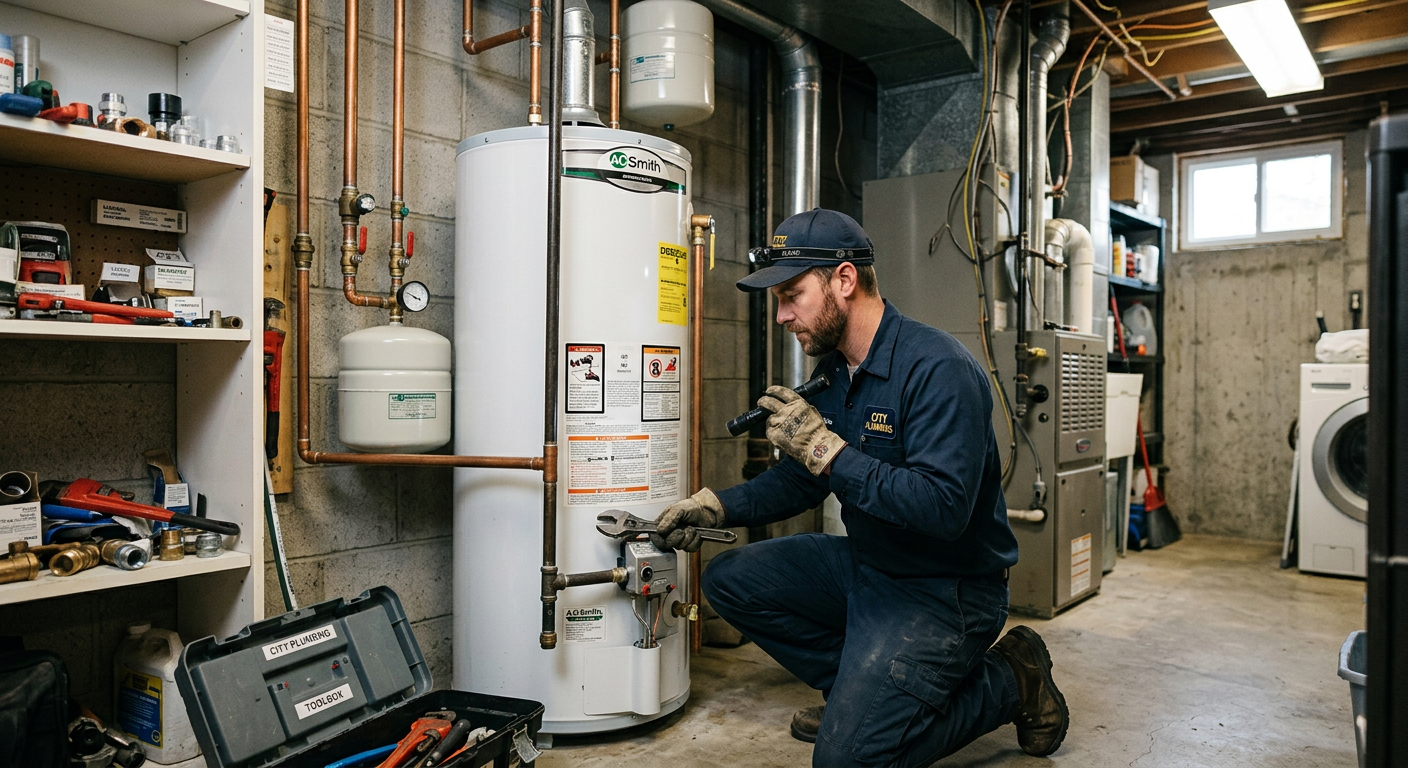
Before you assume the heater has failed, run through these safe checks:
- Note the pattern. Is the first shower fine and the second cold? Is the water lukewarm all day, or does only one bathroom run out?
- Stagger use for one morning. Hold laundry and the dishwasher until after showers, and see if the hot water lasts longer. Improvement points more toward demand or size than a sudden failure.
- Check the thermostat setting on the tank. Note what it shows, but do not open electric panels.
- Look, without touching gas or electrical internals, for leaks, rust, or pooling water, and listen for rumbling when the heater runs.
- Check whether the problem is whole-house or single-fixture. If only one shower runs out, the issue may be that shower’s valve or mixing, or simply that shower’s higher flow, not the tank itself.
If the pattern points to size, see our guide to what size water heater your family needs in Tulsa before you shop for a replacement.
What needs a pro
Some jobs need training, the right tools, and a licensed plumber. That includes flushing sediment safely when a unit has not been maintained, replacing a dip tube, heating element, or thermostat, and any gas burner work. It also includes diagnosing tankless flow problems, descaling a tankless unit, and sizing a replacement correctly for your home and habits.
You can learn more on our Water Heater Services page, and if you are weighing a different kind of system, read our honest look at tankless water heaters in Tulsa — the pros and cons for homeowners.
Should you repair, upsize, or go tankless?
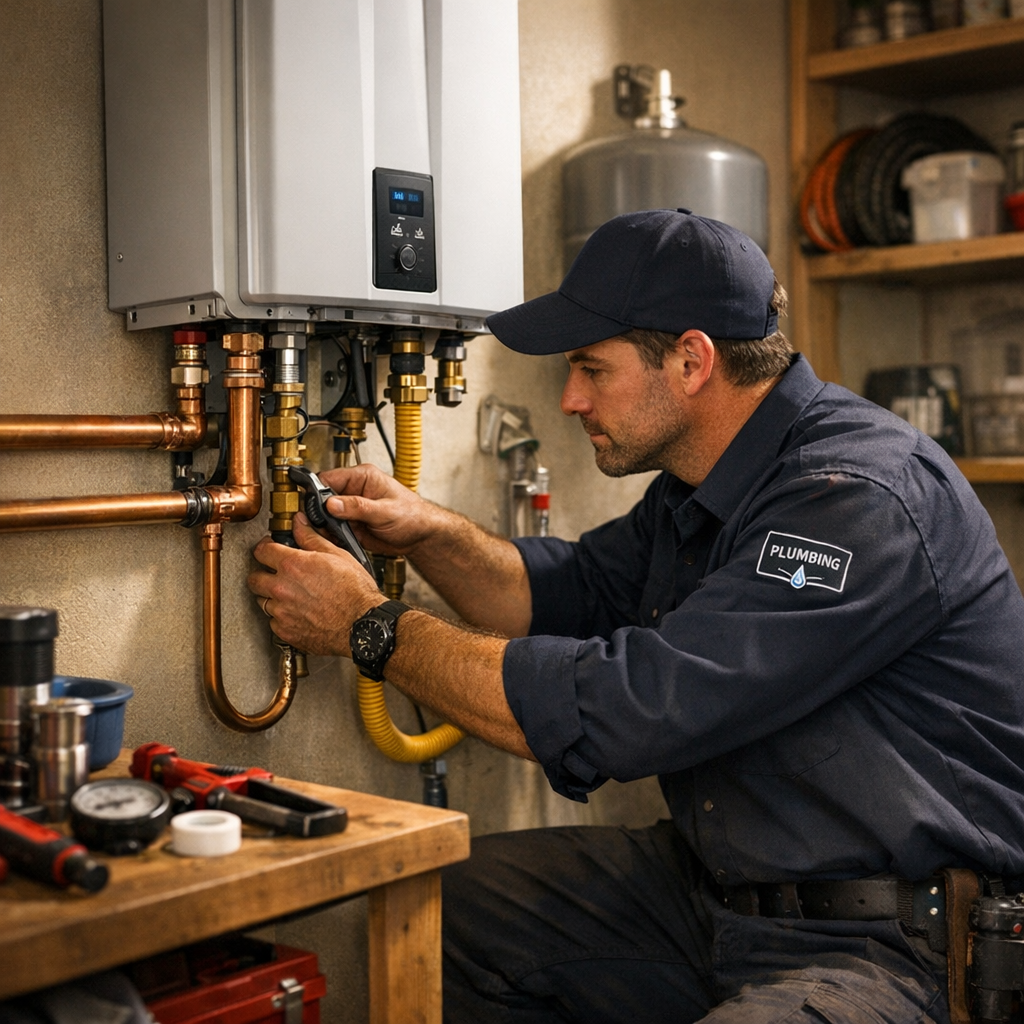
Repair often makes sense if the unit is relatively young and the cause is a single part or sediment that can be addressed. Upsizing, or switching systems, makes more sense if your demand has genuinely outgrown the tank — the heater works, but there is not enough of it for your household now. Tankless gives you continuous hot water within its flow limits, but it is not unlimited at peak simultaneous demand. Two showers, laundry, and the dishwasher at once can still test a tankless unit, especially in winter.
Frequently asked questions
Why does my hot water run out faster in winter?
Incoming water is colder in winter, so your heater has to work harder to raise it to temperature. Recovery takes longer, and a tank that coped in summer can fall behind in winter.
Can flushing my water heater help?
Yes, if sediment is part of the cause. Flushing can restore some usable volume and improve heating. If the heater has not been maintained for a long time, have a pro flush it, because valves and sediment can create problems during a first flush.
Why does only my shower run out, not the sink?
A shower uses hot water much faster and for longer than a sink. A shower valve or mixing problem can also make one shower feel like it runs out first. If other fixtures still have plenty of hot water, the tank may not be the whole story.
If your hot water keeps running out, Colossal Plumbing can inspect your water heater, find the real cause, and talk through repair or replacement options. Call (918) 553-0138 — Mon–Sat 7 AM–7 PM, with 24/7 emergency service — or use the site’s contact / Get a Quote page.
