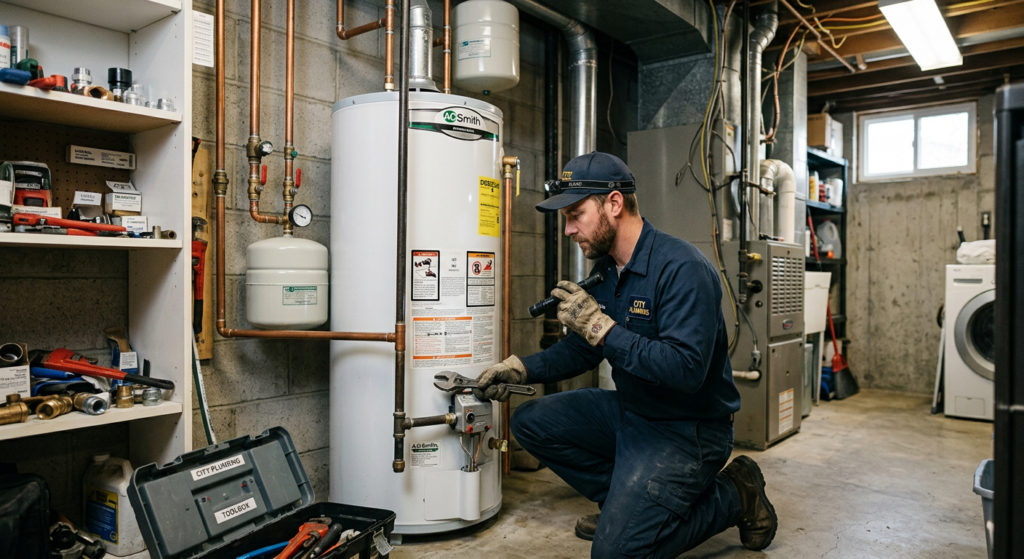
If your water heater quits, the first question after “how fast can I get hot water back?” is usually “is this covered under warranty?” The honest answer is: sometimes, partly — and the details matter more than the big number printed on the side of the tank.
A water heater warranty is not one promise. It is usually two or three separate promises — one for the tank, one for the parts, and sometimes a separate, much shorter one for labor — and each one has its own clock, its own conditions, and its own exclusions. Understanding which promise applies to your problem is the difference between a repair that costs you little and a surprise bill.
The short answer: what a warranty usually covers
Most manufacturer warranties cover defects in materials or workmanship. If the tank itself fails — it rusts through and leaks from the tank body within the tank warranty period — the manufacturer typically provides a replacement tank. If a covered part fails early because it was defective, the manufacturer typically provides that part.
What that usually does NOT mean is a free, brand-new, fully installed water heater. The manufacturer’s warranty generally covers the unit or the part, not the plumber’s time to swap it, not permits or code upgrades, and not damage the leak caused to flooring, drywall, or belongings. That gap between “covered” and “free” is where most warranty disappointment happens.
Tank coverage vs. parts coverage: two different clocks
The tank warranty
The tank warranty is the headline number most homeowners remember. Tank models are commonly sold with different tank warranty lengths, and a longer tank warranty is often one of the main differences between otherwise similar models. This coverage applies when the tank itself fails — most often leaking from corrosion inside the tank. A leaking tank cannot be repaired; the heater has to be replaced.
The parts warranty
Parts coverage applies to components such as the thermostat, gas control valve, heating elements, ignition parts, and pressure-and-temperature relief valve, when they fail due to a defect. Parts coverage often runs the same length as the tank coverage on a tank heater, but not always — check your paperwork rather than assuming. And remember: even when the part itself is provided under warranty, the labor to diagnose and install it usually is not included in the manufacturer’s coverage.
Labor coverage is separate
Labor, when it is covered at all, usually comes from the installing company, not the manufacturer, and it is typically much shorter than the tank or parts coverage. Ask at installation what labor coverage you have, get it in writing, and keep it with the warranty paperwork. Years later, that one page answers most arguments before they start.
For how Colossal handles replacements and repairs, see our Water Heater Services page.
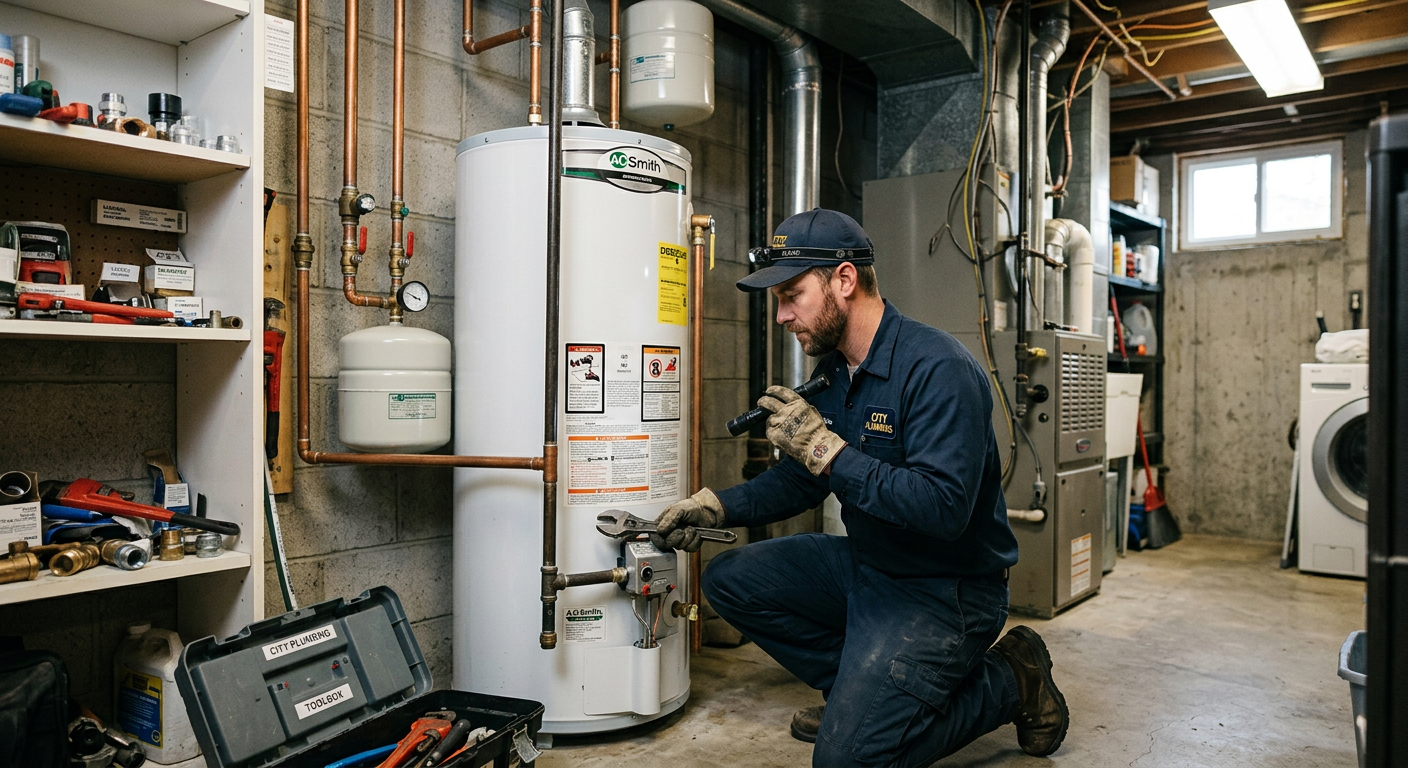
What can void or limit a warranty
Warranties come with conditions, and these are the ones that most often catch Tulsa homeowners out:
- No proof of purchase or installation date. The warranty clock usually starts on the installation date; without paperwork, the manufacturer may date it from the serial number instead, which can shorten your coverage.
- The heater was never registered. Some manufacturers offer longer coverage when the product is registered within a set window after installation, and standard coverage when it is not. Registration takes a few minutes — do it.
- Improper installation. A heater installed without required venting, expansion protection, drain pan, or to code may not be covered when it fails.
- Lack of maintenance. Sediment build-up and a worn-out anode rod are maintenance issues. If a tank fails early from corrosion that routine maintenance would have slowed, a claim can get difficult.
- Wrong use. A residential heater used in a commercial setting, or a heater run at settings or with water conditions outside the manufacturer’s limits, may fall outside coverage.
- Unauthorized or incorrect repairs. Using incorrect replacement parts can complicate a later claim.
Tankless warranties are different
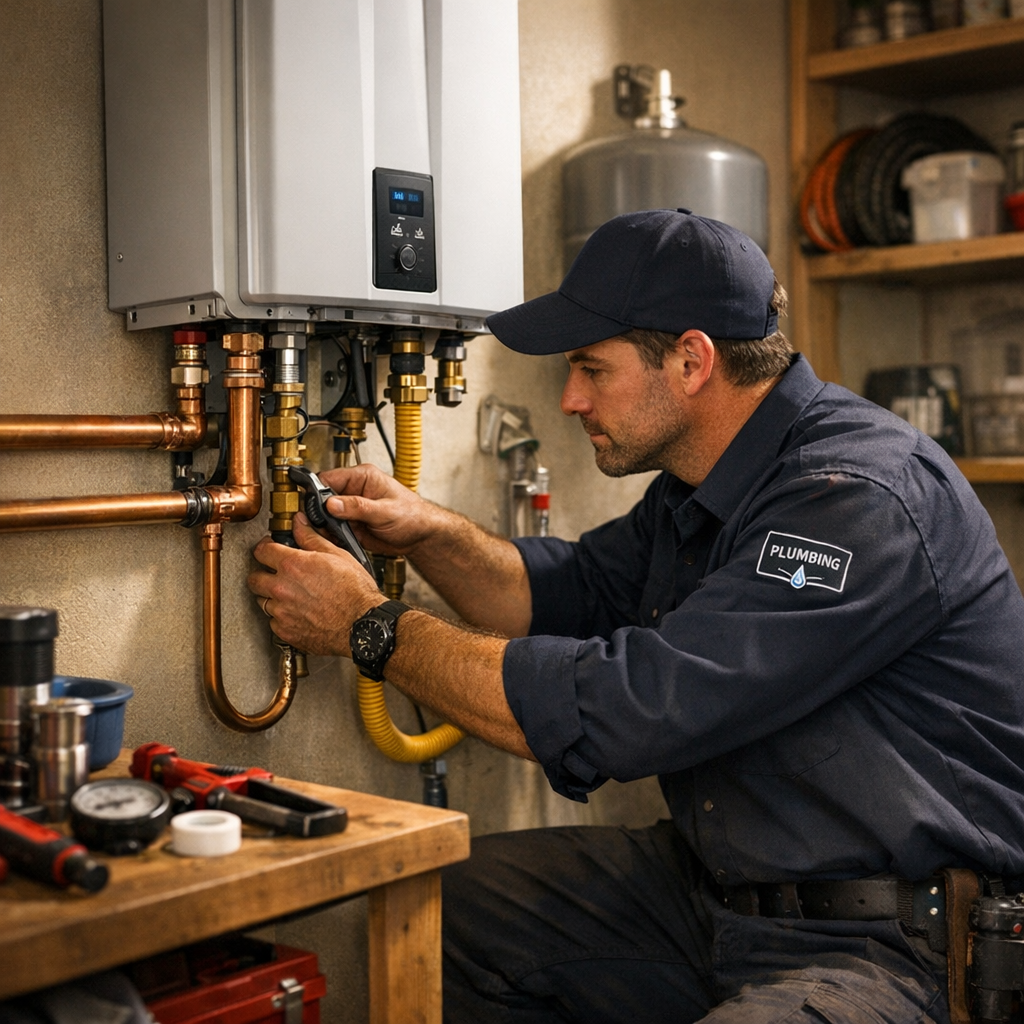
Tankless units work differently, so their warranties do too. Instead of a tank that can rust through, the part that matters most is the heat exchanger, and tankless warranties typically give the heat exchanger its own, longer coverage period, with separate, shorter periods for other parts and for labor. The trade-off is maintenance: tankless manufacturers commonly require regular descaling, especially in hard water, and may ask for proof of it. Tulsa’s water is hard enough that scale is a real factor in how long any water heater lasts here.
That is why we covered this in detail in How Often Does a Tankless Water Heater Need Descaling in Tulsa? — and if you are still deciding between systems, Tankless Water Heaters in Tulsa: The Honest Pros and Cons for Homeowners lays out the trade-offs plainly.
Five things to do now, before anything breaks
- Find the label. Photograph the rating plate on your heater — model, serial number, and install date if it is written there. That photo is the starting point for any claim.
- Find the paperwork. Keep the warranty, the install invoice, and any registration confirmation together, ideally as photos on your phone as well as paper copies.
- Register if you have not. If your heater is fairly new and unregistered, register it now; you may still be inside the window.
- Stay current on maintenance. Flush a tank heater regularly and replace the anode rod when needed; descale a tankless unit on schedule. Our guide to How Often Should You Flush Your Water Heater in Tulsa? explains the why and how.
- Know your heater’s age. If it is already near or past the age covered in How Long Does a Water Heater Last in Tulsa?, start budgeting for replacement instead of counting on warranty help that may no longer exist.
When a warranty claim makes sense — and when it may not
A claim usually makes sense when the tank itself leaks within its coverage period, or when a major part fails early on a heater that is otherwise in good shape. It may make less sense when the heater is old, inefficient, and already showing several problems at once: putting a warranty part into a heater that will need replacing soon anyway can be money and time spent delaying the inevitable. A good plumber should walk you through both paths — claim and repair, or replace — with the ages and dates in front of you, not pressure you toward either.
If the tank is leaking now, treat that as urgent and read My Water Heater Is Leaking in Tulsa — What to Do Right Now before you do anything else.
Frequently asked questions
Does a water heater warranty cover labor?
Usually not under the manufacturer’s warranty. Manufacturer coverage typically provides the tank or the part. Labor coverage, when it exists, usually comes separately from the installer and for a shorter period. Always ask what labor coverage you have at installation and keep it in writing.
Does my warranty transfer if I buy a house with a water heater already in it?
Often it can, but terms vary by manufacturer, and some require the transfer to be documented within a set time after the sale. Check the paperwork left by the seller and the manufacturer’s terms for that model and serial number — do not assume coverage carried over automatically.
Will a warranty cover damage from a leak?
Typically, no. Manufacturer warranties are generally limited to the heater or its parts. Damage to floors, walls, or belongings from leaking water is usually a homeowner’s insurance question, which is one more reason to catch a slow leak early.
Not sure what your warranty covers? Ask before it breaks
If you live in Tulsa, Broken Arrow, Owasso, Bixby, Jenks, Sand Springs, Sapulpa, Claremore, or anywhere in our service area, Colossal Plumbing can check your heater’s age, condition, and warranty status and tell you plainly what is and is not covered. We are open Mon–Sat 7 AM–7 PM with 24/7 emergency service. Call (918) 553-0138 or reach us through our contact page — and if hot water is out or the tank is leaking, call now rather than waiting on paperwork.
